
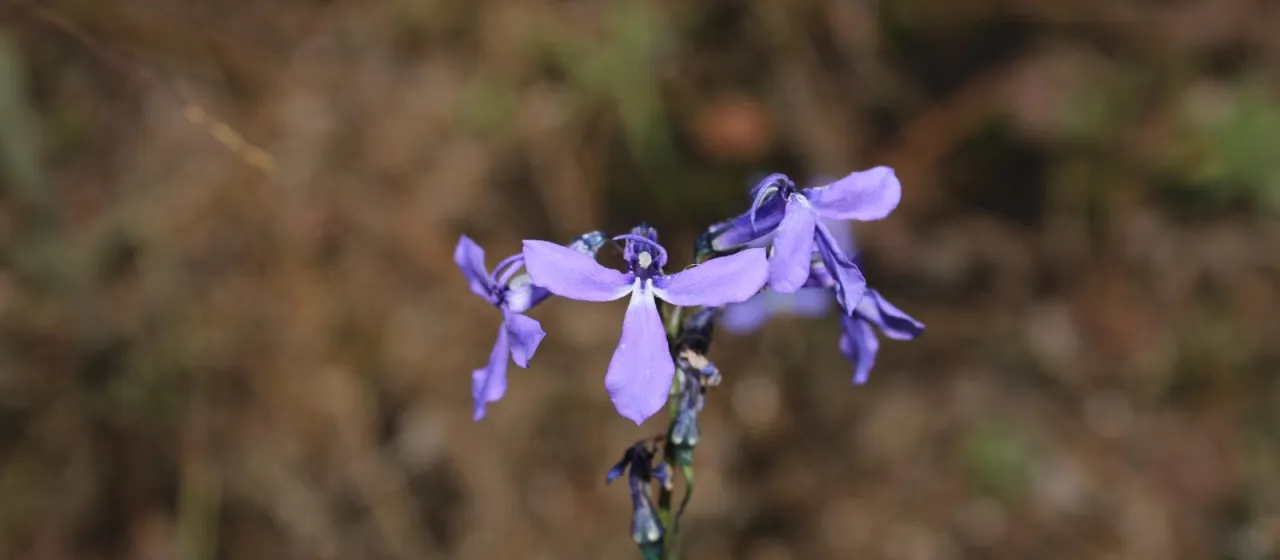
Description
Lobelia anatina is a perennial herbaceous plant belonging to the Campanulaceae family. It is a distinctive species within the Lobelia genus, known for its specific ecological requirements and elegant growth habit. While not widely grown as a mass agricultural crop, it is highly valued in specialty horticulture for its aesthetic appeal in moist garden settings.
The plant originates from North America, typically inhabiting meadows and areas adjacent to wetlands. This native distribution indicates its natural affinity for moist, fertile soils. Over time, it has been introduced into various gardening practices where its adaptability to damp conditions makes it a useful component for riparian-style planting or perennial border displays.
Botanically, Lobelia anatina is characterized by upright, slender stems and lance-shaped foliage arranged in an alternate pattern. The inflorescence is typically a terminal raceme featuring the classic bilabiate flowers typical of the Lobelia genus, often displaying shades of vibrant blue or purple. The root system is relatively shallow, requiring stable soil moisture to maintain plant vigor.
Successful cultivation of this species requires well-drained yet consistently moist soil, rich in organic matter. It thrives in locations with full sun to partial shade. Proper horticultural management involves ensuring consistent watering regimes, as the plant is sensitive to drought. Mulching may be used to retain soil humidity and suppress weed competition during the early growth stages.
- Monitor for common pests like aphids and spider mites.
- Ensure good air circulation to prevent fungal diseases.
- Apply balanced fertilization during the peak growing season.
- Prune spent stems to encourage potential secondary blooming.
Common issues affecting Lobelia anatina include susceptibility to root rot if soil drainage is inadequate, and powdery mildew if environmental humidity is too high without ventilation. Integrated pest management, including regular inspection and maintaining healthy plant spacing, is the most effective approach to protecting the crop and ensuring long-term survival in the landscape.