
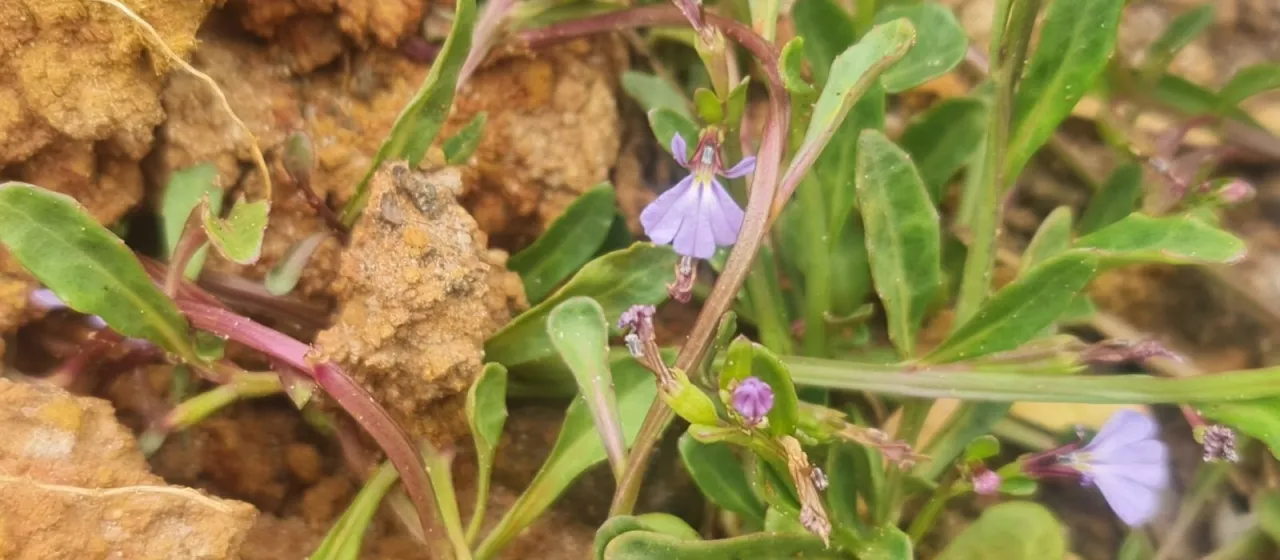
Description
Lobelia anceps is a perennial herbaceous plant belonging to the family Campanulaceae. Known for its creeping growth habit, this species is highly valued for its ability to form dense mats, making it a distinctive choice for specific horticultural applications where moisture-loving ground covers are required.
The plant originates from regions in South Africa and Australia. In its natural habitat, it thrives in wetland areas, riverbanks, and marshy soils. This evolutionary background dictates its current needs in cultivation, where a consistent moisture supply is the most critical factor for successful growth and health.
Botanically, Lobelia anceps is recognized by its stems, which possess a characteristic two-edged or winged appearance, contributing to the name anceps. The leaves are generally lanceolate or ovate, and the flowers, often small and pale blue to white, emerge from the leaf axils, creating a delicate display throughout the growing season.
Cultivation requirements for this species focus on a substrate that retains moisture without becoming stagnant. It prefers partial shade to full sun, provided the soil moisture is sufficient to prevent stress. Growers should prioritize a nutrient-rich, slightly acidic to neutral soil mix, supplemented with organic matter to ensure vigorous development.
- Requires consistent irrigation to maintain soil humidity.
- Best propagated by division or soft-stem cuttings.
- Benefits from occasional trimming to maintain a dense, compact form.
In terms of хозяйственное usage, the plant is widely used in landscape design, particularly for pond edges, damp borders, and bog gardens. Its hardiness in wet environments makes it an excellent choice for stabilizing soil in moist areas and creating green focal points in temperate or tropical garden settings.
Like many plants in the Lobelia genus, this species can be susceptible to fungal issues if air circulation is poor, particularly during periods of high humidity. Common pests include aphids and spider mites, which can be managed through regular monitoring, proper spacing, and the application of suitable horticultural soaps or insecticides when necessary.