
Description
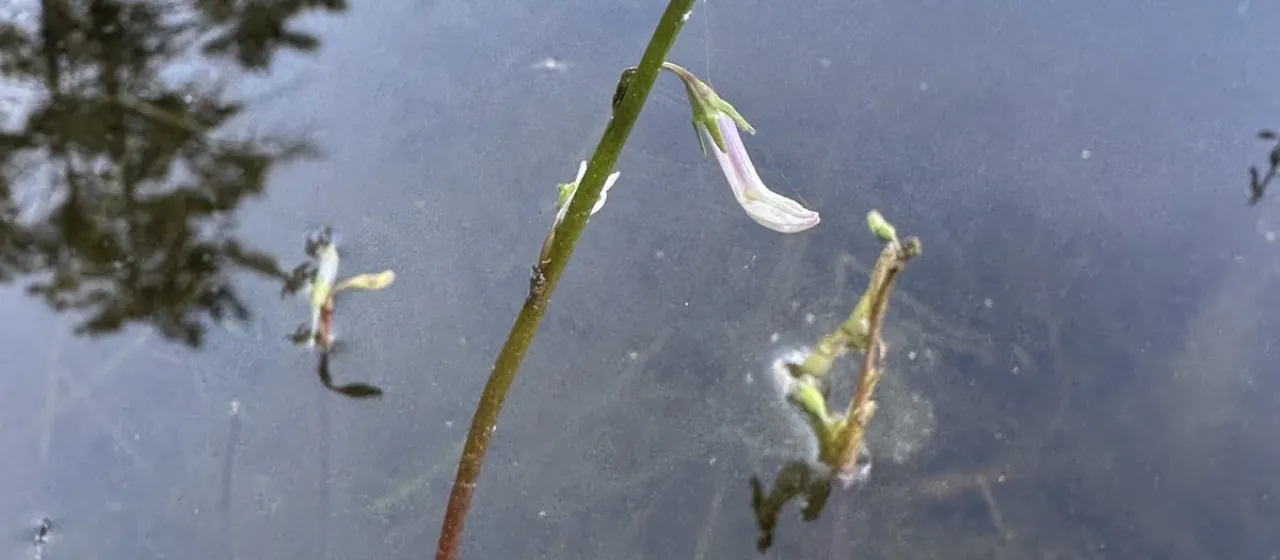
Water lobelia (Latin name Lobelia dortmanna) is a perennial aquatic herbaceous plant belonging to the Campanulaceae family. This species is highly specialized for life in oligotrophic freshwater environments, typically found in lakes with very clean, nutrient-poor water and sandy substrates.
The native range of this species covers northern and temperate regions across Europe and North America. It is considered a rare plant in many areas, functioning as a sensitive ecological indicator for water quality. Due to its limited distribution and sensitivity to environmental changes, it is protected in many jurisdictions.
Botanically, the plant consists of a basal rosette of fleshy, linear leaves that remain submerged. During the flowering stage, typically in mid-to-late summer, it produces an emergent stalk that rises above the water surface. This stalk supports small, delicate, pale blue or white flowers that are typical for the family but uniquely adapted to its semi-aquatic habitat.
Regarding its cultivation, Lobelia dortmanna is not a standard agricultural crop. Its maintenance in botanical or specialized collections requires very specific conditions, such as maintaining a low-nutrient water column, proper substrate composition, and stable temperatures. It does not tolerate high levels of nitrogen or organic pollution in its surroundings.
There is no commercial agricultural use for this plant; however, it is recognized for its value in aquatic ecosystem health. The main threats to this plant include water pollution, increased sediment turbidity, and habitat loss due to industrial or agricultural runoff. Conservation efforts are currently focused on preserving its natural lake habitats from eutrophication.