
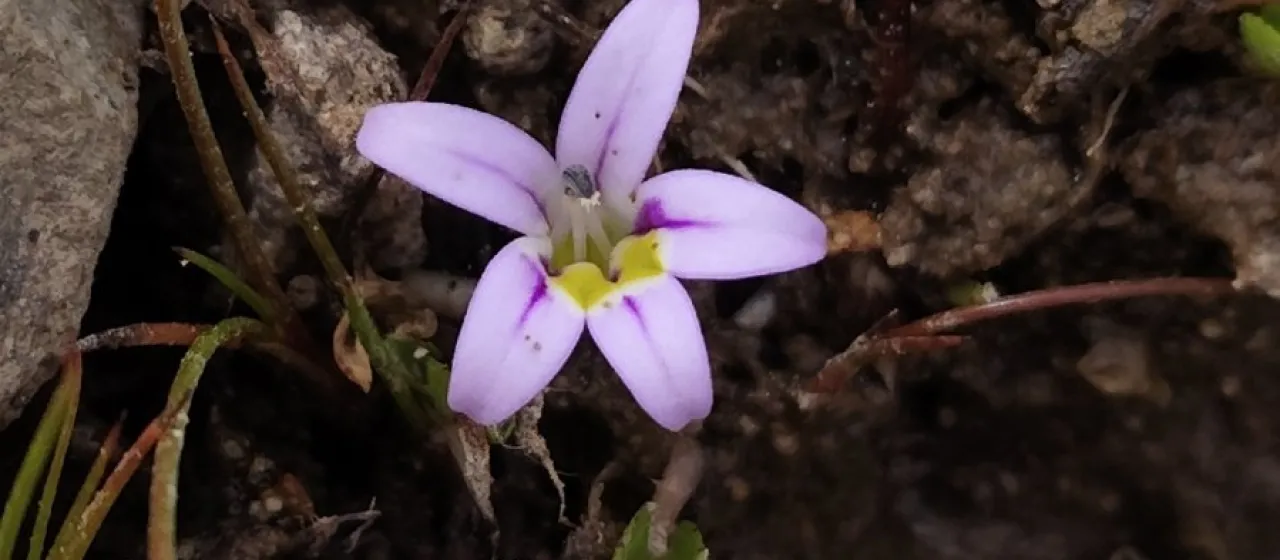
Description
Lobelia oligophylla is a perennial herb belonging to the Campanulaceae family. Known for its distinct morphological structure, this species is less commonly encountered than its garden-variety cousins, representing a specialized group of plants adapted to specific moist environments.
Originating from New Zealand, the plant thrives in habitats characterized by constant moisture, such as wetlands, stream banks, and boggy ground. Its natural distribution reflects its evolutionary preference for cooler, damp climates where humidity remains high throughout the growing season.
Botanically, Lobelia oligophylla is distinguished by its sparse foliage—a trait mirrored in its specific epithet—and delicate, tubular flowers. The growth habit is generally low-forming, making it a subtle yet elegant addition to any collection of moisture-loving botanical specimens.
Cultivation requirements focus heavily on hydration and soil composition. It demands a substrate that is rich in organic matter and consistently moist, yet possesses enough aeration to prevent root suffocation. Ideal growing conditions include partial shade, protecting the plant from the drying effects of direct, midday sun.
In terms of practical use, this species is strictly ornamental. It is highly sought after by enthusiasts of bog gardens and water-feature landscaping. Due to its specific environmental demands, it is not grown for mass agriculture, serving instead as a specialty plant for niche horticultural settings.
The plant is susceptible to common garden pests such as slugs and snails, which are attracted to its moisture-retaining habitat. Additionally, gardeners must monitor for fungal issues related to poor drainage; maintaining a healthy balance of soil moisture is essential to prevent root and crown rot in this delicate species.