
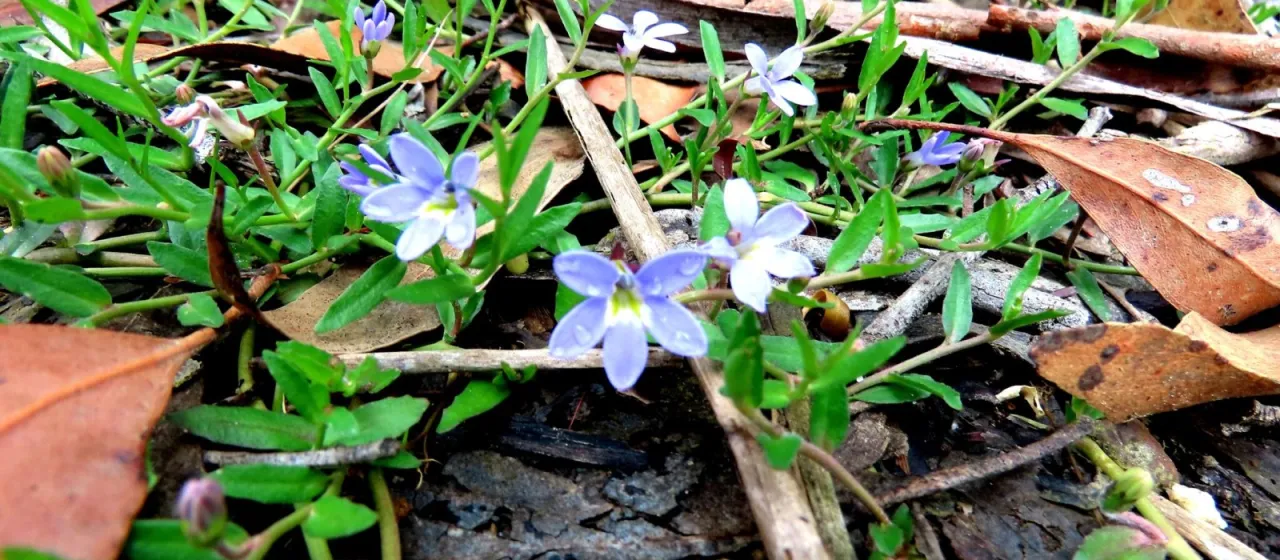
Description
Lobelia pratioides is a perennial herbaceous plant belonging to the Campanulaceae family. It is a distinct botanical species known for its specific ecological requirements and adaptation to riparian and wetland environments, which distinguishes it from the more commonly cultivated annual bedding lobelias.
The native habitat of this plant is primarily in Australia, where it thrives in damp meadows, riverbanks, and marshy terrain. Its distribution is closely linked to its necessity for constant soil moisture, making it an excellent candidate for specialized gardening areas where water availability is abundant and consistent throughout the growing season.
Botanically, it displays a creeping or procumbent growth habit with small, alternate leaves. The flowers exhibit the characteristic irregular shape of the Lobelia genus and are typically colored in shades of blue or pale lavender. The root system is shallow and fibrous, allowing the plant to absorb moisture directly from the surface layers of the soil.
Cultivation requires strict adherence to moisture regimes. The ideal soil for Lobelia pratioides is rich in organic matter, slightly acidic, and consistently wet. While the plant prefers sunny locations, it can tolerate partial shade in warmer climates to prevent the rapid evaporation of moisture from the leaves and soil surface.
In terms of practical use, it serves as an effective ground cover in water garden margins and moist rockeries. The plant is generally resilient, but it can be prone to fungal infections if stagnant cold water persists. Management of pests such as aphids and spider mites is necessary during drier periods when the plant's natural vigor may be slightly reduced.
- Watering: Consistent and heavy
- Sun exposure: Full sun to light partial shade
- Soil type: Humus-rich, loamy, moist
- Propagation: Seeds or vegetative division