
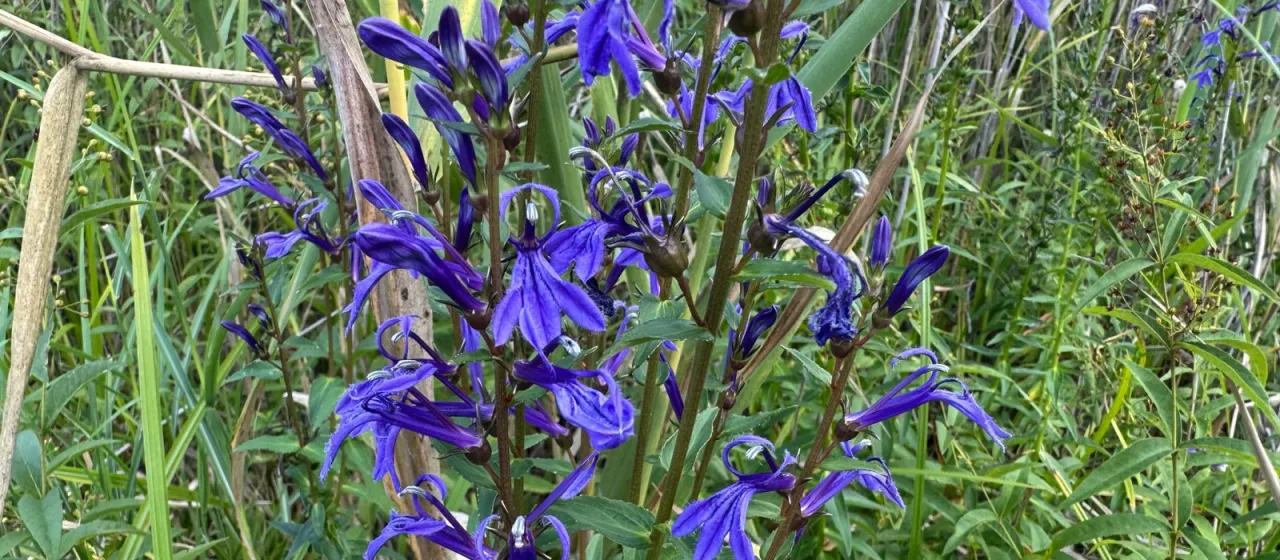
Description
Sessile-leaved lobelia (Lobelia sessilifolia) is a perennial herbaceous plant belonging to the Campanulaceae family. It is a distinctive species known for its tall, upright habit and vibrant blue-violet flowers that create impressive spikes during the mid-to-late summer season.
The species originates from East Asia, with a natural range encompassing the Russian Far East (including the Kamchatka Peninsula), Japan, Korea, and northeastern China. It primarily thrives in wetland habitats, wet meadows, and along the edges of rivers and marshes, preferring environments where moisture availability is high year-round.
The botanical structure of Lobelia sessilifolia is defined by its sessile leaves, meaning they lack a leaf stalk and grow directly from the stem. The plant develops a robust root system capable of withstanding cold winters. Its flowers are specifically adapted for insect pollination, featuring a zygomorphic shape that is highly attractive to various pollinators.
Regarding agrotechnical requirements, the plant demands consistent soil moisture and organic-rich soil to thrive. While it can tolerate partial shade, it performs best in locations with high ambient humidity. Growers should focus on maintaining a stable water supply, as the plant is sensitive to drought conditions. Soil drainage must be sufficient to prevent root rot while still retaining necessary moisture.
In terms of usage, the plant is primarily cultivated as an ornamental species in water-feature landscaping and damp garden beds. Beyond its decorative value, research has focused on its phytochemical properties due to the presence of lobeline-like alkaloids. The plant is occasionally susceptible to fungal diseases such as powdery mildew in poorly ventilated areas and requires monitoring for slugs and snails during the early growing stages.