
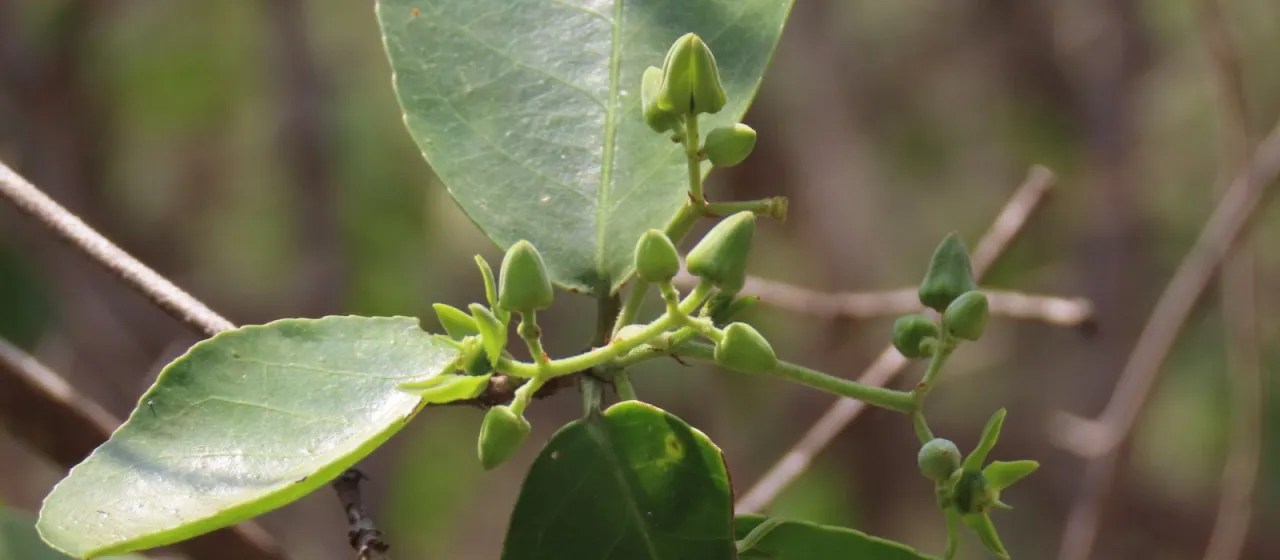
Description
Loeseneriella africana is a species of woody vine belonging to the Celastraceae family. Historically linked to the genus Hippocratea, it has been reclassified to reflect its distinct morphological traits within the Celastraceae lineage. It is recognized primarily as a forest-dwelling climber native to the tropical zones of the African continent.
The origin of Loeseneriella africana is deeply rooted in the lush landscapes of West and Central Africa. Its natural habitat includes dense rainforests and secondary forest edges, where it utilizes host trees to reach the canopy for sunlight. This adaptation strategy allows the plant to thrive in the competitive environment of tropical forest ecosystems.
Botanically, this species is defined by its robust, woody stems and leathery, opposite leaves. The foliage is typically evergreen, maintaining a glossy finish throughout the year. The flowers are small, often arranged in panicles, which play a crucial role in attracting specialized tropical pollinators. The seed dispersal mechanism relies on wind-dispersed pods or winged seeds, which are highly efficient in forest environments.
Climatic requirements are strictly tropical, necessitating high humidity and consistent temperatures between +22°C and +30°C. Regarding soil, the plant thrives in deep, humus-rich substrates that provide both moisture retention and effective drainage. Cultivation attempts require mimicking these conditions, particularly the need for stable tropical temperatures and specialized support structures to manage its climbing nature.
The agricultural and economic significance of Loeseneriella africana is currently centered on traditional pharmacological applications. Various parts of the plant are utilized in local medicinal practices, and preliminary scientific research has indicated the presence of secondary metabolites with potential therapeutic benefits. While not a conventional staple crop, its role in biodiversity and potential pharmaceutical contributions remains a subject of ongoing study.
- Pests: Tropical scale insects and mites can impact growth.
- Diseases: Vulnerable to leaf-spot fungi under poor air circulation.
- Light: High light intensity is required for optimal flowering.
- Cultivation: Requires periodic pruning to manage biomass and structural health.