
Description
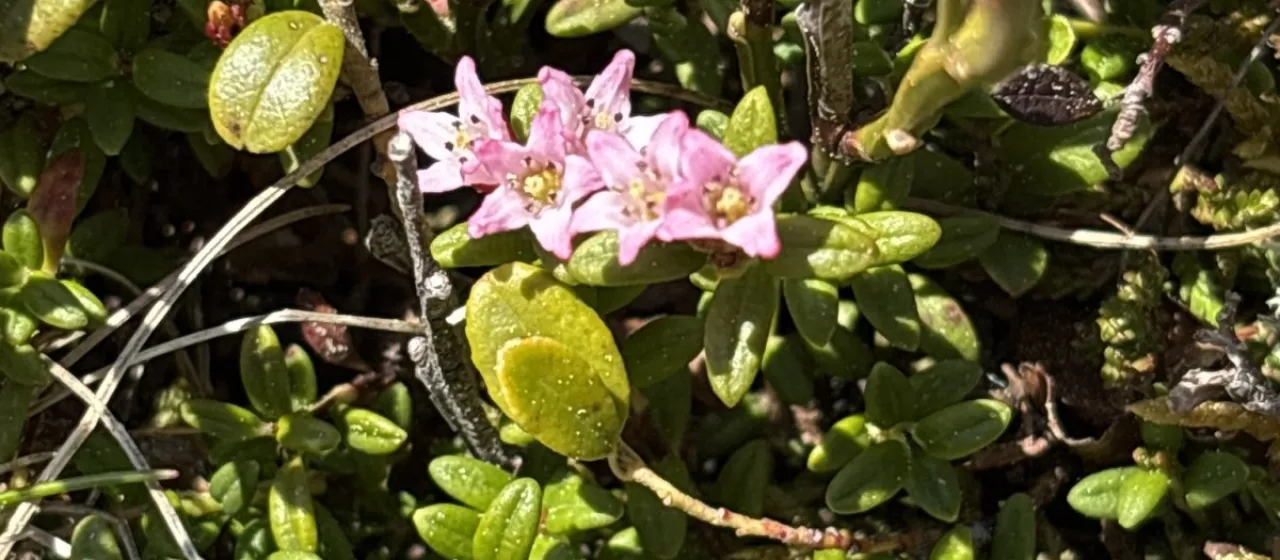
Alpine azalea (Loiseleuria procumbens), formerly classified as Azalea procumbens, is a prostrate evergreen shrub belonging to the Ericaceae family. It is a highly specialized plant adapted to arctic and alpine environments, known for its ability to form dense, mat-like growth that clings to the ground to survive extreme weather conditions.
The plant originates from the mountainous and circumpolar regions of the Northern Hemisphere, spanning from North America to Eurasia. Its natural habitat includes rocky ridges, heathlands, and tundra, where it thrives in exposed conditions. Because of its native environment, it is highly valued by gardeners looking to replicate high-altitude landscapes in specialized alpine beds.
Botanically, it features small, leathery, opposite leaves and tiny, bell-shaped pink flowers. The growth habit is notably slow, often resulting in plants that are decades old but still only a few centimeters tall. The root system is shallow, requiring careful planting to avoid damage while ensuring the plant remains stable in its rocky, nutrient-poor growing medium.
Cultivation of Loiseleuria procumbens requires strict adherence to specific soil and climate parameters. It demands highly acidic, well-draining soil, typically consisting of peat and grit mixtures. The plant is sensitive to heat, particularly when it affects the root zone, making the use of stone mulching essential to maintain stable soil temperatures throughout the growing season.
- Plant in well-drained, acidic soil with a pH of 4.0 to 5.5.
- Provide partial shade in regions with hot summers.
- Irrigate with soft, lime-free water to prevent pH changes.
- Avoid over-fertilization, as the plant is adapted to nutrient-poor soils.
Pests and diseases are usually manageable if the cultural requirements are met. The most common threats include root rot triggered by waterlogged conditions and spider mite infestations in dry, stagnant air. Proper spacing and airflow are crucial to minimize fungal issues. When provided with its preferred environment, it is a resilient and long-lived addition to specialized gardens.