
Description
Giant fescue (lat. Festuca gigantea, synonym Lolium giganteum) is a perennial herbaceous plant belonging to the grass family (Poaceae). It is a valuable forage crop known for its rapid development during the spring and summer seasons and its ability to produce high-quality biomass, making it an excellent component for managed grasslands and pastures.
The species is native to Europe, temperate regions of Asia, and the Caucasus. It typically inhabits moist, shaded environments such as deciduous forests, stream banks, and forest edges. Its notable shade tolerance allows it to thrive in conditions where other sun-loving grasses often struggle, providing a reliable forage source in silvopastoral systems.
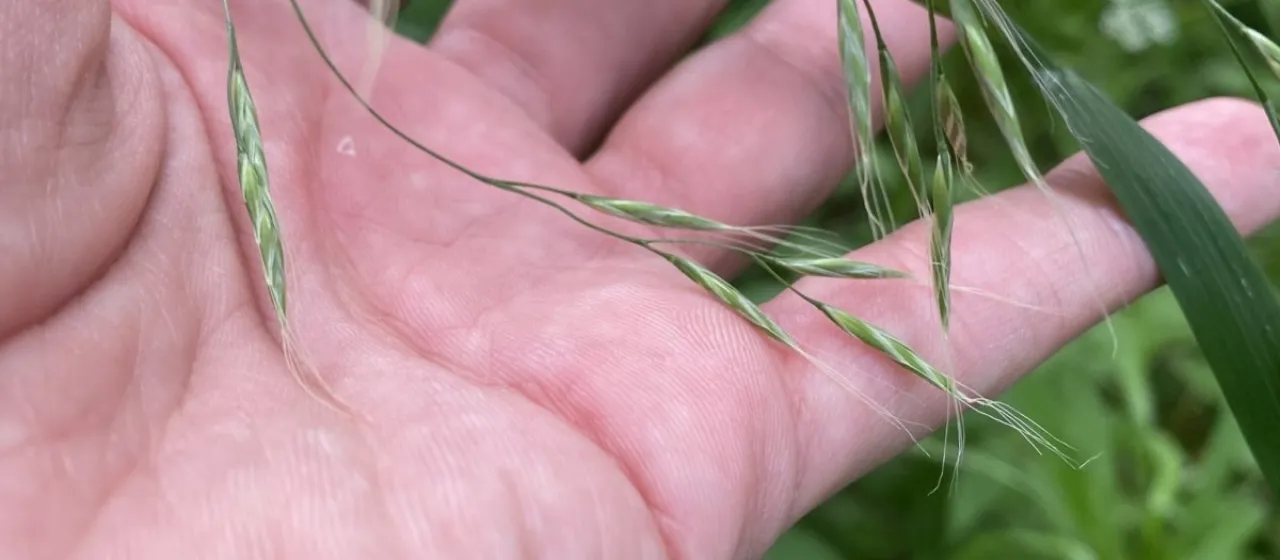
Botanically, giant fescue is a loose-tufted grass that grows between 60 and 150 centimeters in height. Its stems are erect and smooth, complemented by long, flat, rough-textured leaves. During the flowering stage, the plant develops elegant, drooping panicles that can reach up to 30 centimeters in length, providing a distinct appearance during the summer months.
Giant fescue requires fertile, moisture-retentive loamy soils to reach its full potential. It is sensitive to prolonged drought and prefers well-drained but humid conditions. Agrotechnical management involves sowing seeds in early spring or late autumn with row spacing of 15–20 cm. Early weeding is crucial for establishing a healthy, competitive stand in the first year.
The agricultural importance of giant fescue is primarily centered on livestock feeding. It is highly palatable and nutritionally dense prior to the heading stage. Key utilization areas include:
- Establishment of long-term hayfields in forest-zone regions.
- Integration into pasture mixtures for cattle and sheep.
- Soil stabilization and forage production in shaded landscape areas.
The plant is susceptible to common grass diseases, such as powdery mildew and various rust fungi, which are more prevalent in dense, humid conditions. Pests like cereal flies and aphids may cause damage during the intensive growth phase. Regular mowing or grazing is recommended to manage disease incidence and encourage vigorous regrowth, ensuring the longevity of the forage stand.