
Description
Arizona honeysuckle (Lonicera arizonica) is a perennial deciduous shrub belonging to the Caprifoliaceae family. Known for its distinct upright growth habit and attractive, slender tubular flowers, it serves as a valuable specimen plant in various garden settings. It stands out in the genus for its unique floral morphology and aesthetic appeal.
Native to the southwestern United States, specifically the mountain regions of Arizona and New Mexico, this species is well-adapted to high-altitude environments. It typically grows in woodland areas and canyons, thriving in conditions that provide adequate air circulation and moderate light. Its evolutionary history has endowed it with resilience against the harsh climate variations of the American Southwest.
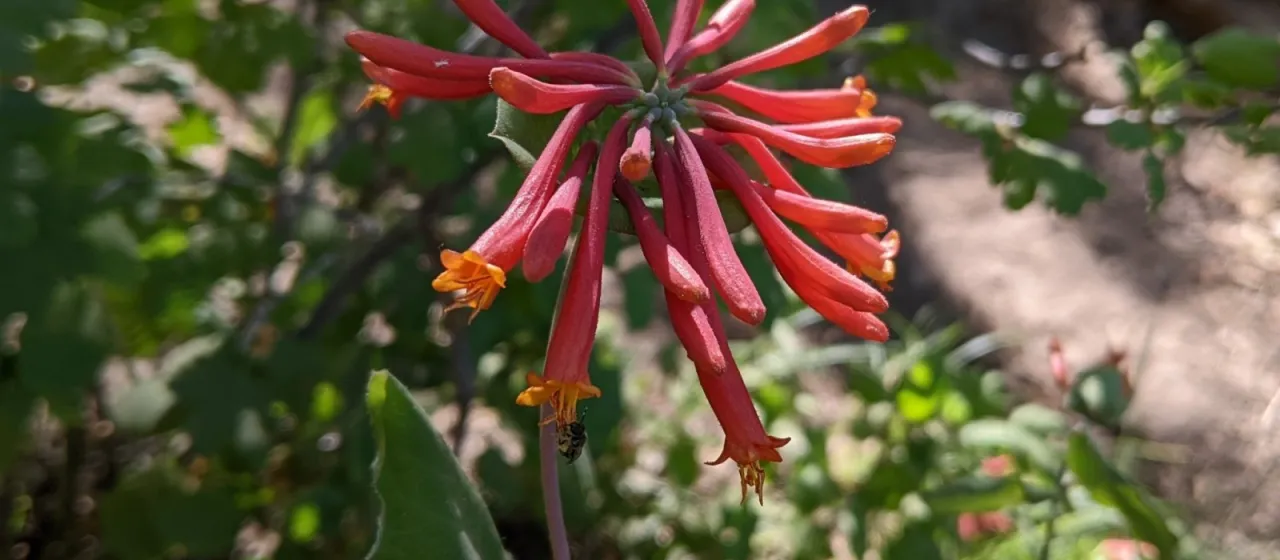
Botanically, the plant features oval-shaped, opposite leaves and vibrant, multi-colored flowers ranging from orange to deep red. These blooms are essential for attracting local hummingbirds, which act as primary pollinators. After flowering, the shrub produces small berries that provide a necessary food source for local wildlife, emphasizing its ecological value beyond pure aesthetics.
In terms of cultivation, Lonicera arizonica requires well-draining soil that is rich in organic matter. While it is somewhat drought-tolerant once established, supplemental irrigation during the peak of summer is recommended to maintain vigorous growth and vibrant flowering. It prefers a location with full morning sun and partial afternoon shade to prevent heat stress during exceptionally hot spells.
The primary use for this species is ornamental landscaping, where it is favored for its architectural form and pollinator-friendly traits. Common maintenance includes annual pruning to remove dead wood and encourage new growth. Gardeners should monitor for common issues such as aphids and powdery mildew, ensuring healthy development through proper spacing and regular sanitation of the planting site.
- Thrives in well-draining, slightly acidic to neutral soil.
- Highly effective for attracting hummingbirds and butterflies.
- Requires consistent pruning for optimal floral display.
- Hardy in regions mimicking its natural mountainous habitat.