
Description
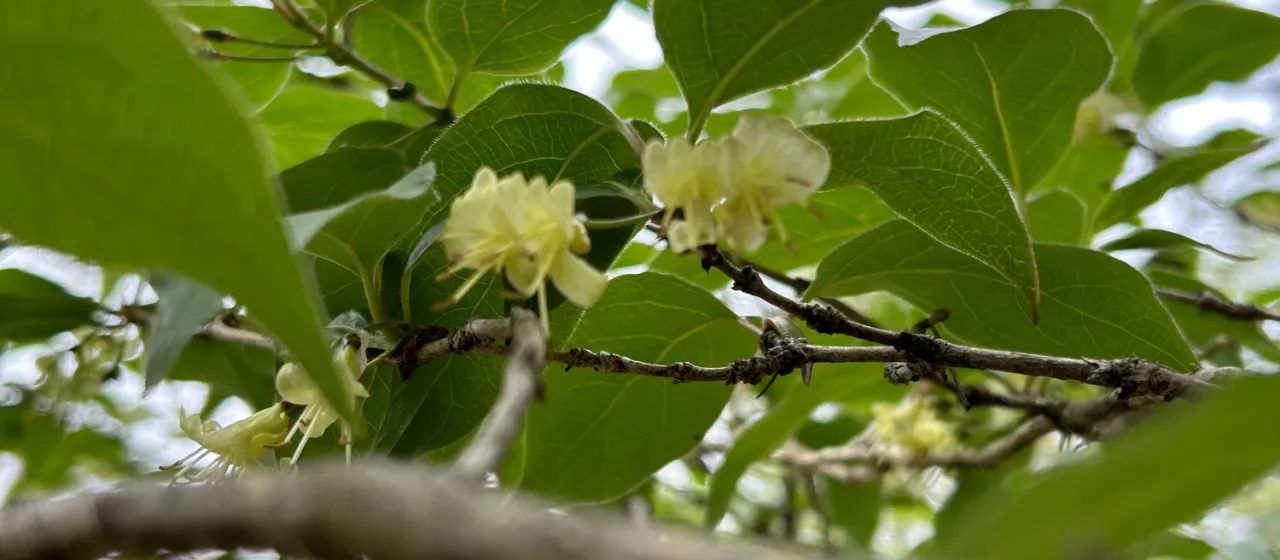
Yellow-flowered honeysuckle (Lonicera chrysantha) is a deciduous shrub species within the Caprifoliaceae family. It is a highly valued ornamental plant known for its aesthetic appearance in parks and gardens, specifically for its bright yellow flowers and subsequent crimson red berries.
The species is native to East Asia, spanning regions of China, Korea, and the Russian Far East. It typically thrives in woodland margins and mountain slopes, showcasing a strong capacity to adapt to diverse ecological conditions, which makes it a resilient choice for cultivation in temperate climates.
The shrub typically reaches a height of 3 to 4 meters. The leaves are ovate and pointed, and the flowers emit a mild fragrance during the spring bloom period. The plant produces inedible, showy red berries in late summer, providing significant visual interest and food for local bird populations in garden environments.
Cultivation requirements involve planting in well-drained, fertile soil that receives full sun to partial shade. Standard agronomic practices include routine pruning to maintain shape and airflow, spring application of balanced fertilizers, and mulching around the root zone to preserve moisture levels during the summer heat.
Economically, the plant is primarily utilized for landscaping and erosion control on slopes. While it is generally robust, growers should monitor for common issues such as aphids or powdery mildew, particularly in humid or overcrowded conditions. Proper spacing during planting is essential to prevent disease outbreaks and ensure healthy development.