
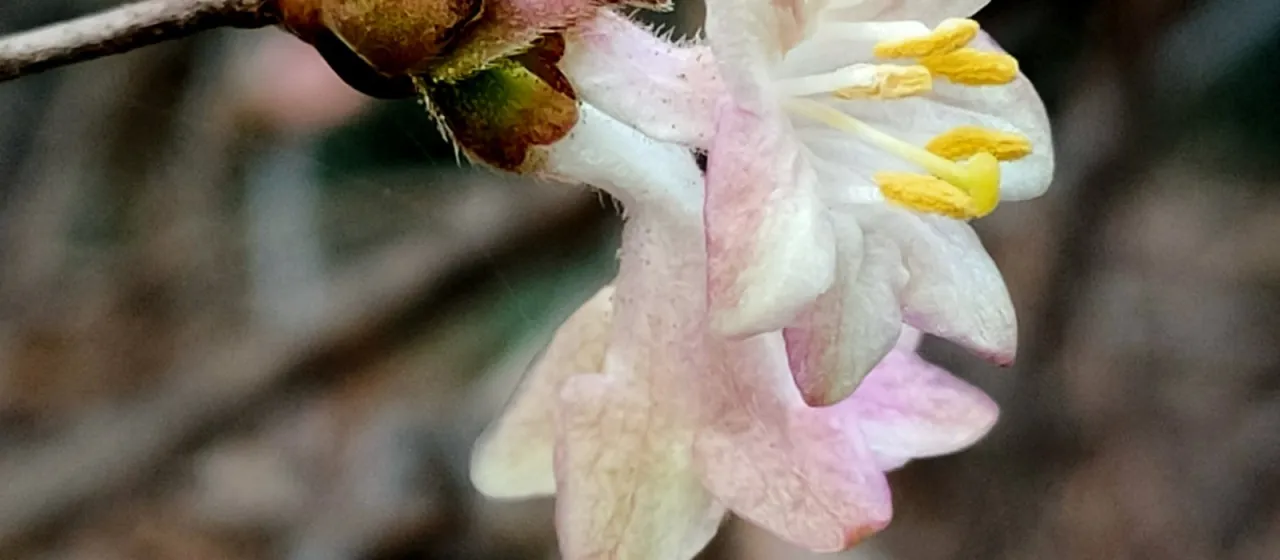
Description
Elisa's honeysuckle (Lonicera elisae) is a perennial deciduous shrub belonging to the Caprifoliaceae family. This species is recognized for its unique morphological structure and its ability to adapt to various environmental conditions. Unlike common edible species, this shrub is primarily valued for its aesthetic appeal and structural density in landscape architecture.
The plant originates from East Asian regions, including parts of the Korean Peninsula and China. In its native habitat, Lonicera elisae thrives in mountain scrublands and forest edges. This geographic distribution explains its preference for rocky, well-drained soils and its inherent resilience to fluctuating environmental temperatures found in its indigenous range.
Botanically, this honeysuckle is characterized by opposite leaves and distinctive tubular flowers. Its growth habit is moderate, resulting in a compact bush that can be easily trained or pruned. The root system is robust and deep-reaching, allowing the plant to sustain itself during dry spells, provided it has established its primary root mass in nutrient-rich soil.
Cultivation of Lonicera elisae requires a location with partial shade to full sun. While it is not overly demanding regarding soil type, it performs best in neutral to slightly acidic, well-draining loams. Regular mulching is recommended to retain soil moisture, and a balanced application of slow-release fertilizers in early spring will support the plant's seasonal foliage development and overall vigor.
The species serves primarily as an ornamental shrub in horticulture, though researchers often study its traits for genetic improvement of the genus. Like most honeysuckles, it can be susceptible to several issues if not properly managed:
- Powdery mildew during periods of high humidity.
- Aphid infestations on new, succulent growth.
- Fungal root rot in waterlogged or heavy clay soils.