
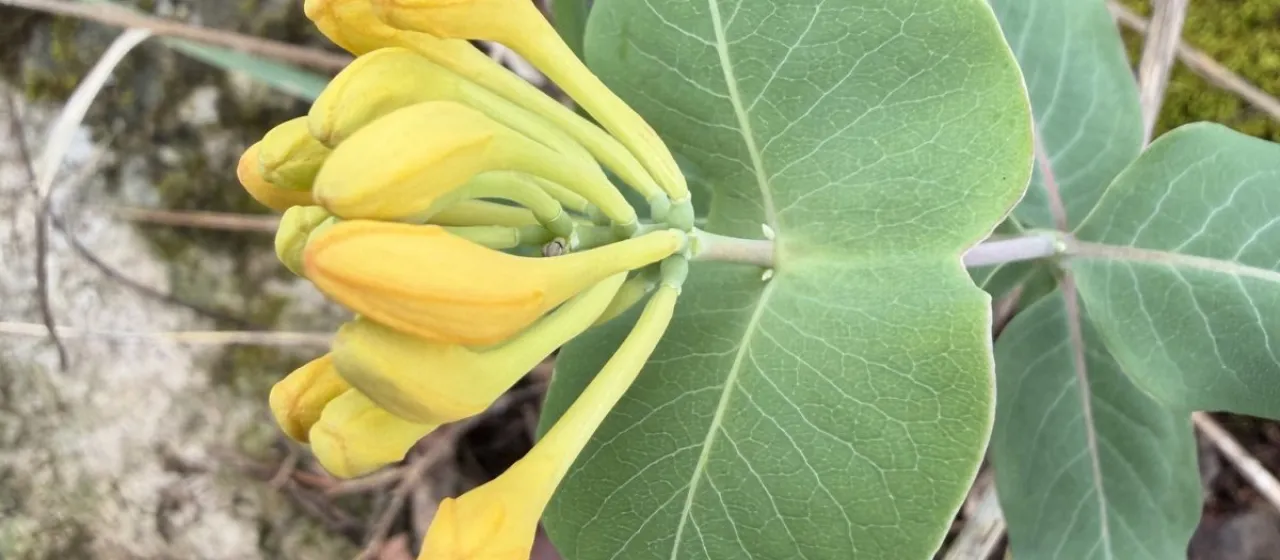
Description
Yellow honeysuckle (Lonicera flava) is a perennial woody vine belonging to the Caprifoliaceae family. Known for its vigorous growth and striking appearance, it is a popular choice for vertical gardening, providing both lush foliage and fragrant, colorful flowers during the spring and early summer seasons.
Native to the southeastern United States, this species thrives in rocky woodlands and mountain slopes. Its natural habitat suggests a preference for well-drained locations with adequate air circulation, which is a key factor when adapting this plant for domestic horticultural use.
Botanically, Lonicera flava is characterized by its twining stems and distinctive foliage where the upper leaves often fuse to form a disk. The flowers are tubular, bright yellow to golden-orange, and arranged in dense whorled clusters. These flowers are highly valued for their sweet fragrance and ability to attract pollinators like bees and hummingbirds.
Successful cultivation requires a location with full sun to partial shade. The soil must be fertile, moist, and well-drained. Essential agronomic practices include the installation of sturdy trellises for climbing, periodic pruning to manage size and shape, and a consistent watering regimen, especially during the establishment phase of the plant.
While generally hardy, Yellow honeysuckle can be susceptible to various health issues if maintenance is neglected. Common problems include:
- Powdery mildew in poor ventilation conditions
- Aphid infestations on new shoots
- Scale insects feeding on stems
- Leaf spot diseases due to excessive moisture