
Description
Mediterranean honeysuckle (Lonicera implexa) is an evergreen climbing shrub belonging to the Caprifoliaceae family. Unlike many other species of the genus, it is widely recognized for its ornamental value rather than its fruit. This robust perennial plant uses its stems to climb vertical surfaces, making it a popular choice for garden structures.
The native distribution of this species covers the Mediterranean basin, extending from Southern Europe to parts of North Africa. It is well-adapted to coastal and scrubland environments, often found in rocky terrains where it tolerates summer droughts. Its resilience in these challenging habitats makes it a distinctive botanical subject for warm-climate gardening.
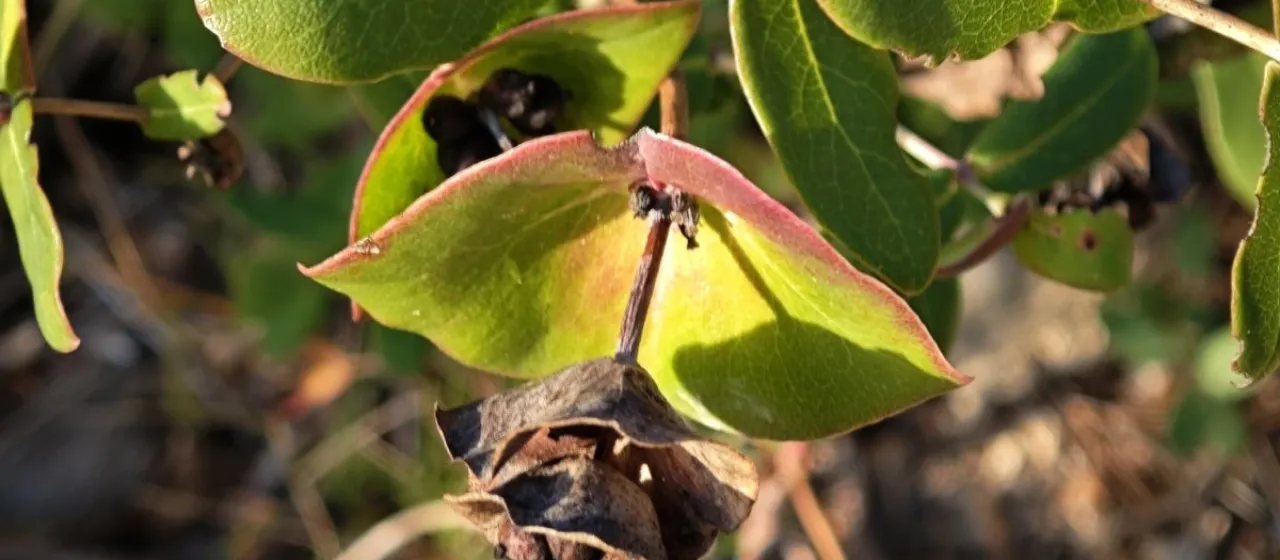
Botanically, Lonicera implexa is characterized by its leathery, dark green, opposite leaves. A diagnostic feature is the fusion of the upper leaf pairs at their base, which form a cup-like structure surrounding the flower cluster. The flowers themselves are tubular, cream or yellowish with subtle pink tinges, and are known to attract pollinators with their pleasant fragrance.
Agricultural and gardening requirements for this plant focus on providing excellent soil drainage and sufficient light. While it prefers sunny locations, it can tolerate partial shade. Proper maintenance includes periodic pruning to manage its vigorous growth, as well as providing strong trellis systems to support its climbing habits during the growing season.
The primary use of this crop is in ornamental landscape design, particularly for covering walls, fences, or pergolas. Regarding plant health, the species is occasionally susceptible to aphids and fungal pathogens like powdery mildew, especially in high-humidity conditions. Integrated pest management, including regular inspection and timely treatment, is essential to keep the plant in good condition.