
Description
Giant-flowered honeysuckle (Lonicera macrantha) is a perennial climbing vine belonging to the Caprifoliaceae family. Known for its vigorous growth habits and fragrant, showy flowers, this species is a popular choice for ornamental horticulture and vertical landscaping.
The plant originates from East Asia, particularly within the mountainous regions of China. In its native habitat, it thrives in forest margins and clearings, scaling trees and rocks for support. Since its introduction to other regions, it has been widely utilized in temperate climates as a decorative climber for trellises and facades.
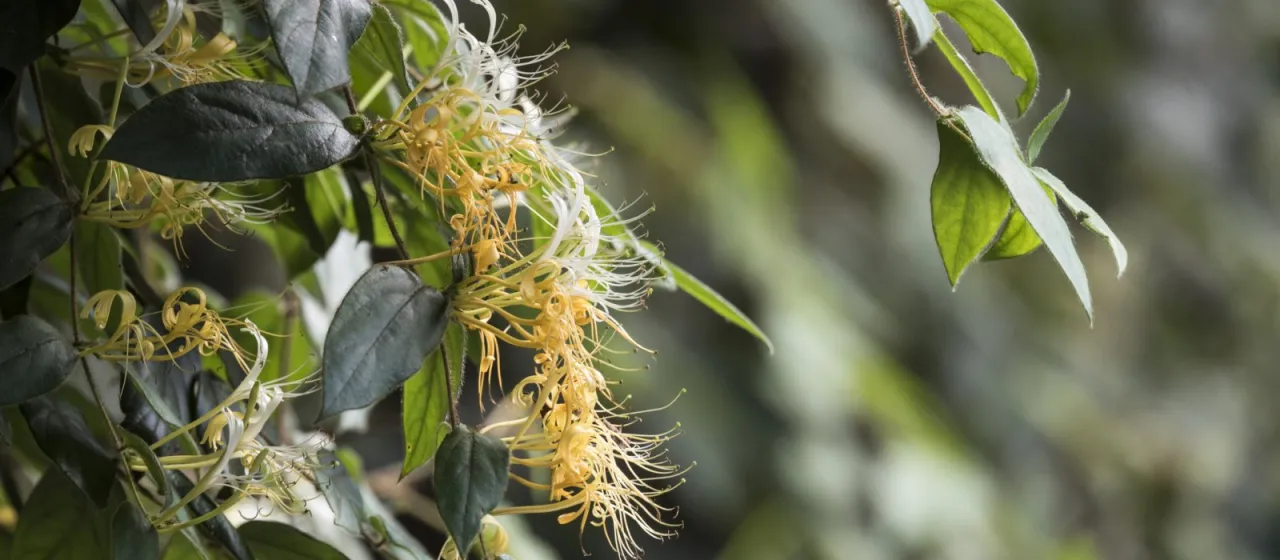
Botanically, Lonicera macrantha is characterized by woody stems that can reach significant lengths. Its leaves are opposite, often remaining evergreen in milder climates. The flowers are distinctive due to their large size and tubular shape, which undergo color changes during the blooming period. Following fertilization, the plant produces berries which are non-edible.
Cultivation requires a location with full sun to partial shade and soil that is well-drained but moisture-retentive. Agronomic care involves regular irrigation during the growing season and the provision of sturdy support structures. Pruning is essential for maintaining the shape of the vine and encouraging the next season's floral display.
The primary use of Lonicera macrantha is in landscape architecture for screening or covering vertical surfaces. While generally robust, it is susceptible to typical honeysuckle pests such as aphids and leaf-rollers. Preventive measures include ensuring good air circulation to minimize the risk of powdery mildew, especially in humid conditions.