
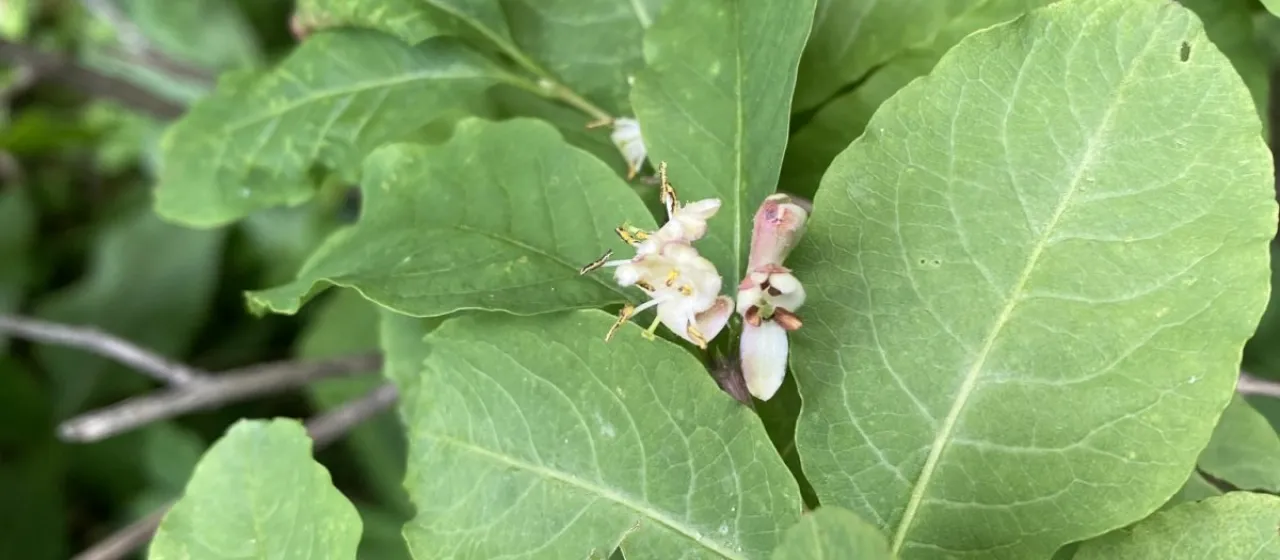
Description
Oriental honeysuckle (Lonicera orientalis) is a deciduous shrub species classified within the Caprifoliaceae family. Known for its robust growth habit, it typically functions as a large, upright shrub that can serve as a structural element in various horticultural settings.
Native to the temperate regions of East Asia, this plant thrives in diverse habitats ranging from mountainous woodland slopes to forest edges. Its evolutionary history has equipped it with strong resilience to fluctuating climatic conditions within its natural geographic range.
From a botanical perspective, the plant is distinguished by its opposite, ovate leaves and intricate floral displays. Unlike some other members of the genus, its fruits—dark, round berries—serve primarily as a visual amenity, attracting birds and adding aesthetic value to the garden during the late season.
Successful cultivation requires well-drained, nutrient-rich soil and a location that receives ample sunlight or partial shade. The shrub is remarkably hardy, though periodic maintenance such as structural pruning is advised to promote vigorous development and maintain the desired shape of the crown.
The primary utility of Lonicera orientalis is found in landscape architecture and ornamental gardening. It is frequently utilized for hedging, as a specimen plant, or as part of mixed shrub borders due to its reliable foliage and ability to tolerate urban environmental stresses effectively.
- Excellent tolerance for seasonal pruning.
- Resistance to typical honeysuckle pests.
- Ability to thrive in diverse soil conditions.