
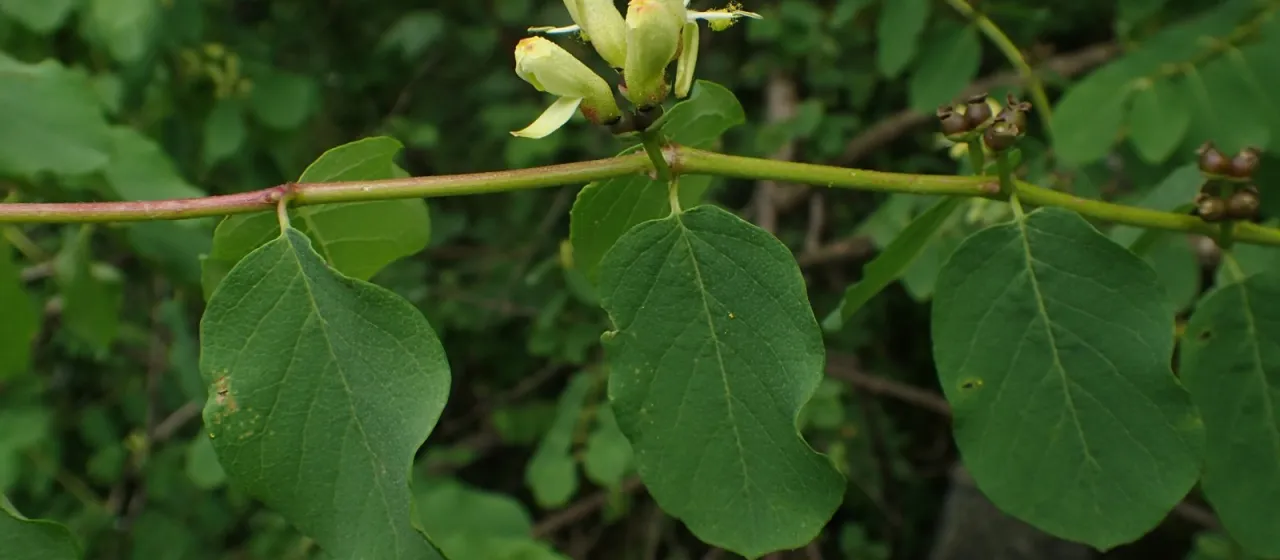
Description
Hairy-flowered honeysuckle (Lonicera trichosantha) is a perennial deciduous shrub belonging to the Caprifoliaceae family. It is distinctively characterized by the presence of fine hairs on its flowers and bracts, which is the primary trait reflected in its scientific name. This species is valued in horticultural circles for its robustness and unique aesthetic qualities.
The native range of this plant is primarily situated in the mountainous regions of Central and East Asia. Thriving in varied altitudes, it has adapted to cold, mountainous climates and distinct seasonal shifts. Its ecological niche includes forest edges and scrubland, where it plays a role in stabilizing soil and supporting local biodiversity through its nectar-rich flowers.
Botanically, Lonicera trichosantha features a complex branching structure with opposite leaves and specialized tubular flowers designed for specific pollinators. The growth rate is moderate, and the plant maintains a shrubby habit that can be managed through pruning. Its physiological adaptations allow it to survive in challenging terrains where soil resources might be limited.
Agronomic requirements for this species include well-drained, fertile soil with adequate organic content. While it can handle various light conditions, full sun exposure is preferred for optimal flowering. Water management is critical during the initial establishment phase; thereafter, the shrub demonstrates significant resilience to temporary dry spells common in its natural habitat.
Management of pests and diseases is essential for maintaining plant health. Common issues include powdery mildew and infestations by aphids or leaf miners. Standard horticultural practices such as proper spacing, regular monitoring, and the use of targeted biological or chemical control methods ensure that the shrub remains healthy and vigorous throughout the growing season.