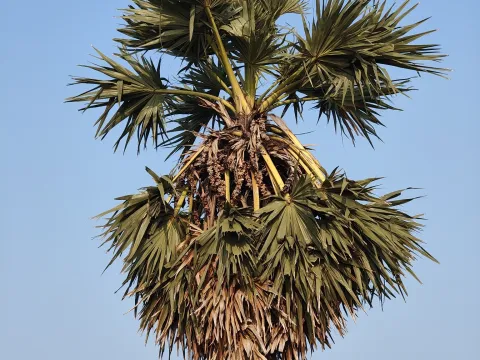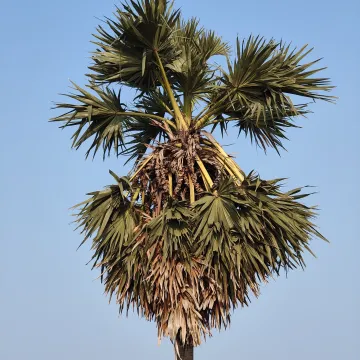
Palmyra palm
Borassus flabellifer L.
Description
The Palmyra palm (Borassus flabellifer L.) is a significant species belonging to the Arecaceae family. It is a robust, single-stemmed palm that holds a deep cultural and economic significance in South and Southeast Asia, often referred to as the «toddy palm» or «wine palm» due to its traditional utility.
Native to tropical regions of Africa and Asia, this palm is highly adapted to tropical climates with distinct dry and wet seasons. It thrives in open, sun-drenched environments and demonstrates excellent resilience to drought, allowing it to grow in regions where other crops might struggle.
Botanically, the Palmyra palm is known for its massive height, which can reach 30 meters, and its large, fan-shaped leaves that create a distinct canopy. The tree is dioecious, meaning that individual plants are strictly male or female, which is a critical factor for farmers when planning plantations for fruit production.
Cultivation requirements focus on well-drained, sandy or loamy soils. While the plant is drought-tolerant, young seedlings require consistent moisture to establish their root systems. Maintenance includes weed control and moderate fertilization during the initial growth years. It is a slow-growing species that rewards farmers with long-term productivity.
Economic uses are extensive: the sap is fermented into palm wine or boiled into jaggery (palm sugar). The fruit is edible, and the leaves are used for handicrafts, thatching, and traditional writing surfaces. Common threats include root rot under waterlogged conditions and infestations by the red palm weevil, which requires vigilant monitoring in commercial groves.
Photo gallery