
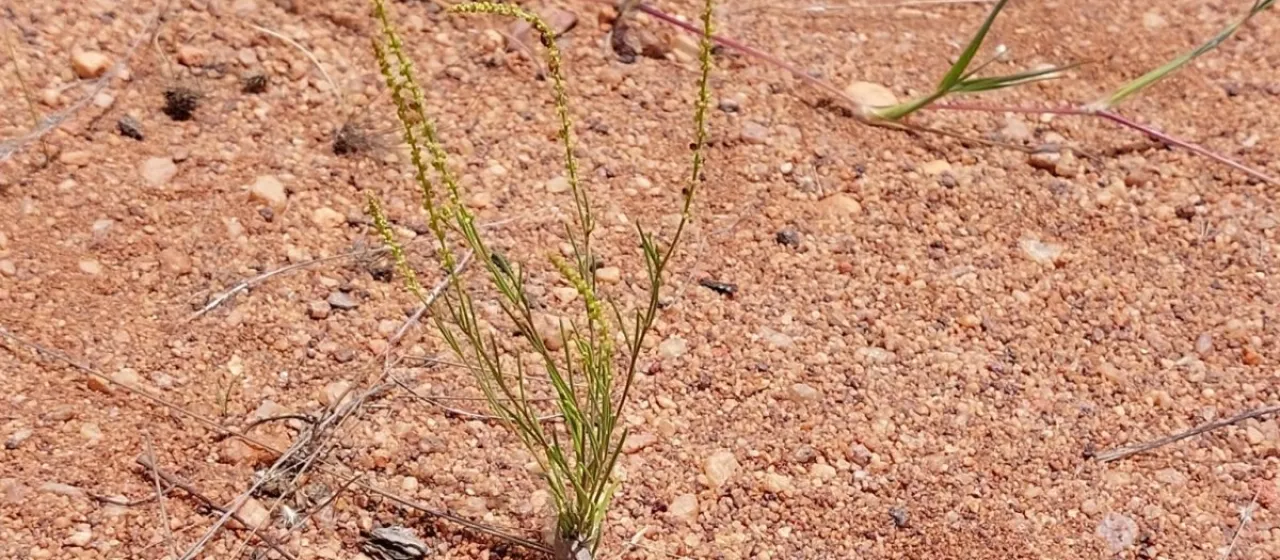
Description
Lophiocarpus tenuissimus is a herbaceous plant belonging to the Amaranthaceae family. Although not a mainstream commercial crop, it represents a significant interest for sustainable agriculture in arid regions due to its remarkable adaptation to harsh environmental stresses and nutrient-poor soils.
The plant originates from Southern Africa, where it has evolved to thrive in semi-desert landscapes. Its natural distribution is confined to regions characterized by low precipitation levels, where it plays an important role in the local ecosystem, providing ground cover in conditions that are lethal to more conventional crops.
Botanically, Lophiocarpus tenuissimus is distinguished by its thin stems and delicate foliage, which are structural adaptations to reduce water loss. The root system is highly efficient at scavenging moisture, allowing the plant to remain dormant or survive through extended periods of extreme drought.
In terms of agricultural requirements, the plant demands well-drained, sandy soils. It is highly intolerant of waterlogging, which can cause rapid root decay. Optimal management requires mimicking the natural drainage cycles of its native environment, ensuring that the soil remains aerobic even during sporadic irrigation events.
The potential economic utility of this species lies in its use as a low-input forage resource or as a component in restoration projects for degraded lands. While specific pest profiles are not extensively documented in literature, common agricultural risks include:
- Root rot pathogens triggered by excessive moisture
- Locust and grasshopper herbivory
- Competition from invasive weeds during the establishment phase