
Description
Loranthus micranthus is a species of hemiparasitic shrub belonging to the Loranthaceae family. This unique plant establishes itself on the branches of host trees, using specialized structures known as haustoria to penetrate the host's tissues and extract water and essential nutrients while maintaining the ability to perform its own photosynthesis.
Originating from the tropical regions of Africa, this plant is widely distributed across various landscapes. It is commonly found in forest ecosystems and agricultural plantations, where it chooses a diverse range of host species, such as cocoa trees, kola, and various fruit-bearing trees, to attach itself for structural and nutritional support.
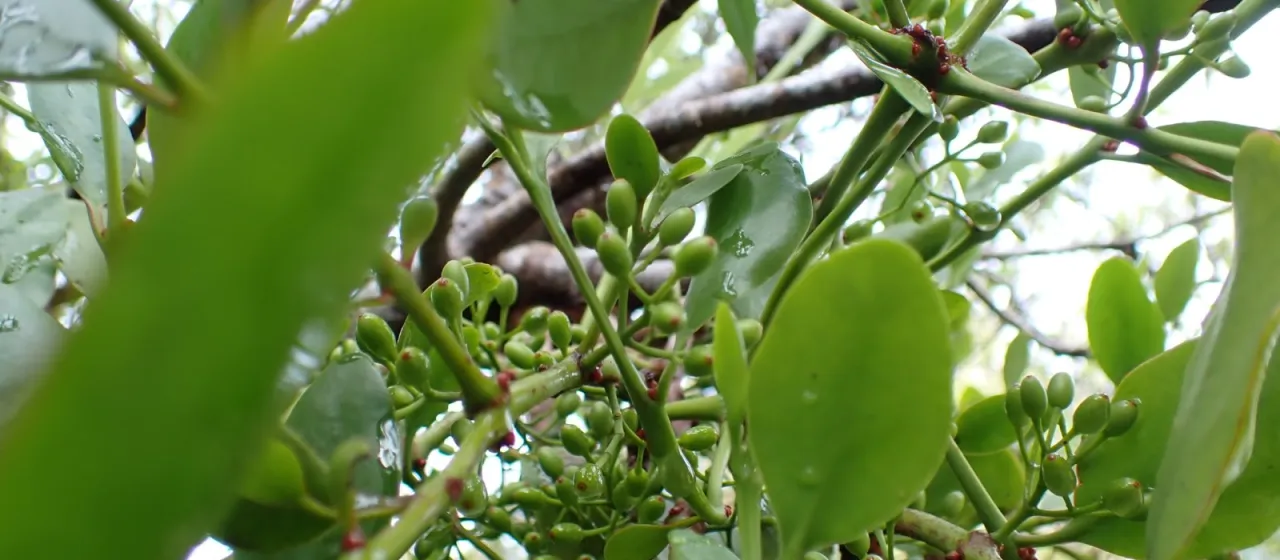
Botanically, Loranthus micranthus is characterized by dense branching and leathery, opposite leaves. The small flowers are typically greenish-yellow and arranged in racemes. The plant produces single-seeded berries that are ingested by birds, which play a crucial role in seed dispersal by depositing them onto the branches of other host trees.
The plant thrives in tropical climates characterized by high humidity and consistent warmth. It does not require conventional cultivation techniques, as its life cycle is fully integrated into the life cycle of its host. In agricultural practice, management strategies are typically designed to minimize its impact, as heavy infestation can stress host trees and reduce agricultural output.
Beyond its ecological role as a parasite, Loranthus micranthus is highly regarded in traditional medicine. It is frequently utilized in African ethnopharmacology for its suspected hypotensive, anti-diabetic, and anti-inflammatory properties. Recent scientific interest focuses on isolating these active compounds, highlighting the plant's dual nature as both an agricultural pest and a source of medicinal compounds.