
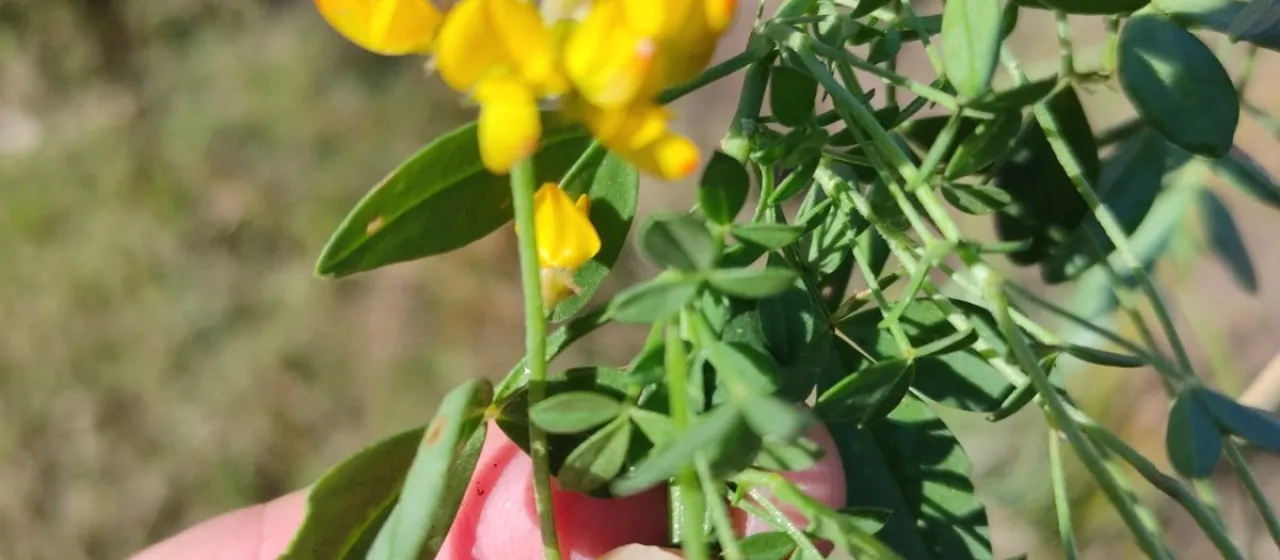
Description
Lotononis bainesii, commonly known as Lotononis, is a perennial legume belonging to the Fabaceae family. It is recognized in agriculture as a valuable forage crop that offers significant nutritional benefits for grazing livestock, coupled with a high nitrogen-fixing capacity that boosts soil productivity.
Native to Southern Africa, this species has been successfully introduced to various tropical and subtropical regions worldwide. It is particularly valued in Australia for its ability to thrive in poor-quality, acidic soils where other common forage legumes typically fail to establish or persist.
Botanically, it is a trailing, prostrate plant with stems that root at the nodes, forming a dense ground cover. The leaves are trifoliate, and the plant produces attractive yellow flowers in dense heads. Its unique root system allows it to compete effectively in low-fertility environments, which is a major agronomic advantage.
Regarding climate and soil requirements, Lotononis bainesii performs best in well-drained, acidic sandy soils. It demonstrates a notable tolerance for cool temperatures and occasional frost, making it more resilient than many other tropical legumes. However, it requires adequate moisture during the growing season to ensure vigorous regrowth after grazing.
The primary use of this crop is in permanent pastures, often mixed with various grasses. It is highly palatable to cattle and sheep. While it is a robust species, farmers should be aware of susceptibility to certain fungal pathogens during prolonged wet weather and the necessity of using specific rhizobial inoculants to ensure effective nitrogen fixation upon sowing.