
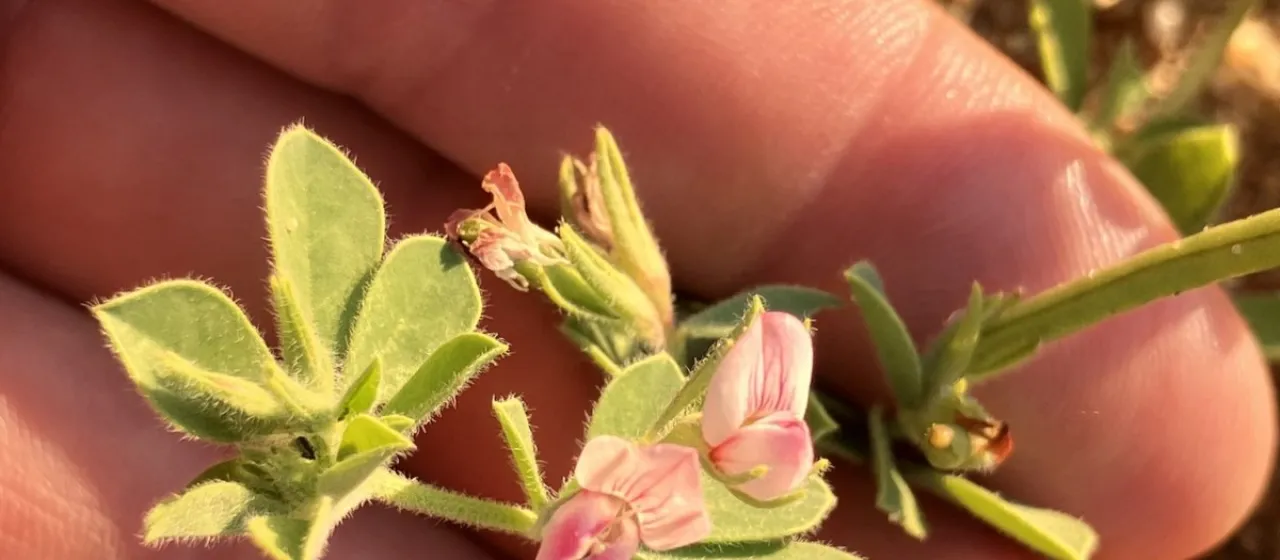
Description
Arabian bird's-foot trefoil (Lotus arabicus) is a perennial herbaceous plant belonging to the Fabaceae (legume) family. Within the agricultural sector, it is recognized for its significant potential as a forage crop capable of thriving in arid and semi-arid environments where water resources are severely limited.
Native to the dry regions of Northeast Africa and the Middle East, the species has evolved mechanisms to survive extreme heat and prolonged droughts. Its role in sustainable agriculture includes soil stabilization and nitrogen fixation, which help to reclaim degraded land and improve the overall fertility of sandy or stony agricultural soils.
Botanically, Lotus arabicus exhibits deep taproots that provide stability and access to deep-seated soil moisture. The plant features trifoliate leaves and yellow, pea-like flowers typical of the genus. Its ability to tolerate high salinity levels makes it a unique candidate for cultivation in environments where soil salinization is a primary agricultural concern.
Agronomic requirements emphasize the need for well-draining soils, as the crop is highly sensitive to waterlogging. Planting should occur after the frost risk has passed to ensure optimal germination. Due to its nitrogen-fixing capabilities, the plant requires minimal nitrogen fertilization, though phosphorus and potassium levels should be managed based on soil testing results.
In terms of usage, the crop is primarily intended for pasture development in hot climates. However, producers must be cautious regarding animal health, as certain plant tissues may contain cyanogenic glycosides. Effective management involves careful monitoring of grazing intensity and potential processing methods such as drying or ensiling to safely integrate the fodder into livestock diets.