
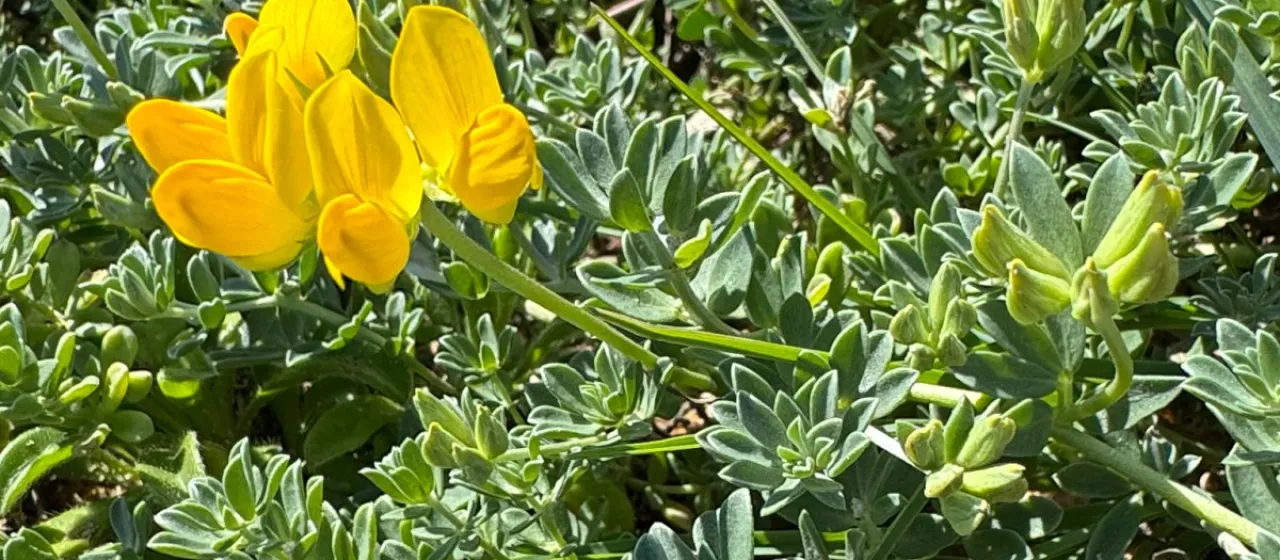
Description
Cretan trefoil (Lotus creticus) is a perennial herbaceous plant belonging to the legume family (Fabaceae). It is well-regarded in agriculture for its ability to thrive in challenging environments, particularly on sandy, saline soils found along coastal regions.
The native range of this species encompasses the Mediterranean basin. It is widely recognized for its ecological importance in stabilizing dunes and preventing coastal erosion. In agricultural management, it is often utilized to protect poor or degraded soils that are prone to wind and water degradation.
Botanically, the plant is characterized by a dense, silvery-grey pubescence that serves as a protective layer against desiccation and high salt concentration. Its trifoliate leaves and bright yellow flowers are typical of the genus. The plant establishes a deep, robust root system that plays a vital role in soil anchoring.
For optimal growth, Cretan trefoil requires abundant sunlight and excellent drainage. It does not demand high soil fertility and performs exceptionally well in sandy or rocky substrates. Standard agronomic practices include direct seeding and minimal intervention, as the plant is highly adapted to low-input management systems.
The primary economic use is in land restoration and erosion control programs. Furthermore, its potential as a drought-tolerant forage resource is under study for arid regions. Pests and diseases are generally manageable, with fungal infections occurring mainly during periods of excessive humidity or poor soil aeration.