
Description
Red-flowered trefoil (Lotus cruentus) is a perennial herbaceous plant belonging to the Fabaceae family. This species is recognized for its agronomic value in semi-arid regions, where it serves as a robust forage crop capable of thriving under challenging environmental conditions.
Originating from Australia, this plant is well-adapted to habitats with variable moisture levels. Its natural distribution demonstrates its resilience, making it a subject of interest for sustainable agricultural projects aiming to improve pasture quality in dryland ecosystems.
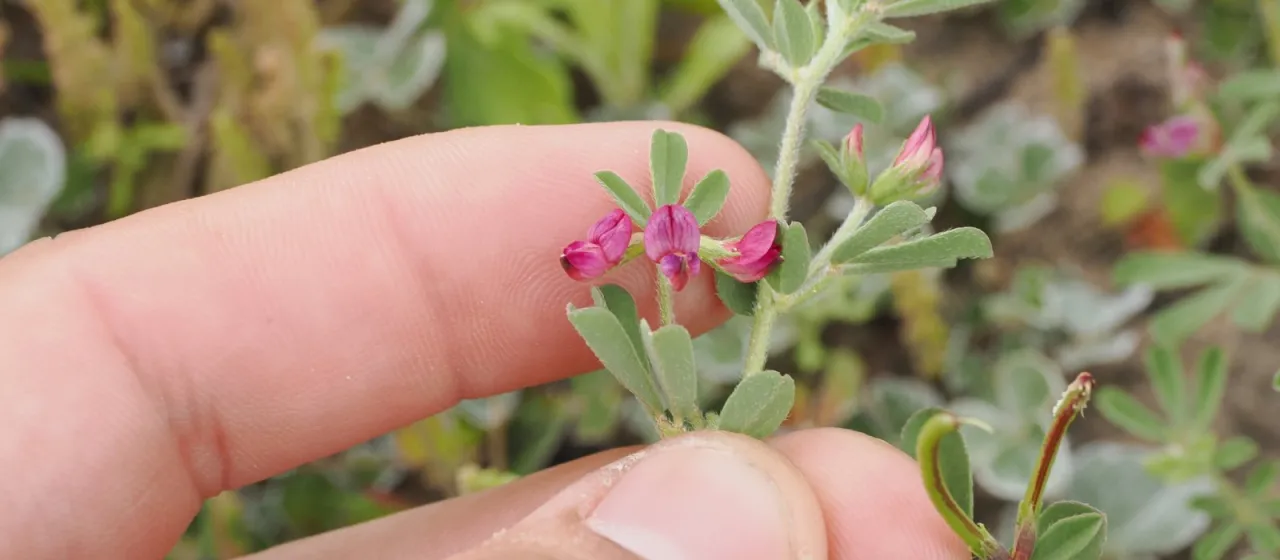
Botanically, Lotus cruentus exhibits a prostrate to semi-erect growth habit with characteristic red flowers that distinguish it from other members of the genus. Its root system is designed for moisture uptake from deeper soil profiles, which contributes to its long-term survival and persistence in pastures.
Successful cultivation requires well-drained, sandy or light loamy soils. The agrotechnical approach focuses on preparing a firm seedbed and ensuring proper seed inoculation. During the establishment phase, it is crucial to minimize competition from weeds, as the plant grows slowly until it fully develops its root system.
The main agricultural use of this plant is as a nutritious component in grazing systems. It provides significant protein content for livestock and helps maintain soil fertility through symbiotic nitrogen fixation. While generally hardy, the crop can be susceptible to root rots if soil drainage is poor, and monitoring for foliage-feeding pests is recommended during the growing season.
- Drought-tolerant perennial
- Nitrogen-fixing properties
- Suitable for poor, sandy soils
- Enhances pasture nutritional value