
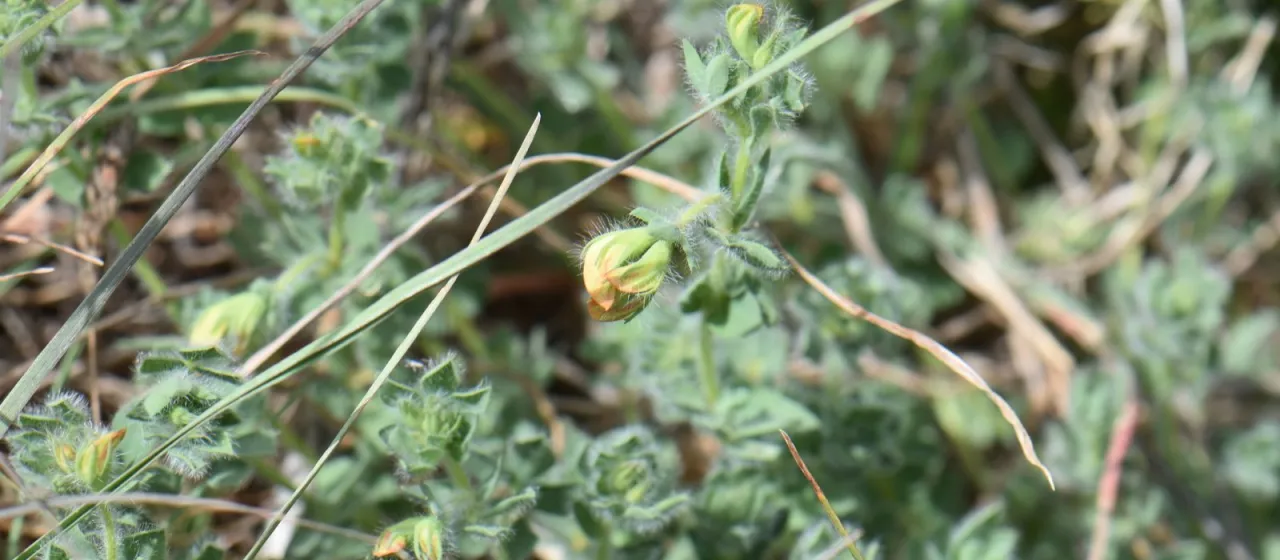
Description
Lotus delortii is a perennial herbaceous plant belonging to the Fabaceae family. In an agricultural context, it is recognized as a hardy forage crop capable of contributing to the productivity of pastures and hayfields, especially in regions characterized by challenging soil and moisture conditions.
The botanical structure of this species includes a robust root system that provides stability and nutrient absorption in sparse soils. The stems are generally prostrate or ascending, while the leaves are compound and trifoliate. Its inflorescences consist of small, bright yellow flowers, which are typical for the genus and contribute to the overall biological diversity within the field environment.
Originating from the Mediterranean region and southern Europe, Lotus delortii is well-adapted to Mediterranean-type climates. It thrives in sunny locations and shows remarkable resilience to low fertility and stony substrates, making it an excellent candidate for land reclamation and the improvement of marginal agricultural areas where standard legumes might fail.
Regarding agronomic practices, the crop requires minimal initial inputs but benefits from basic seedbed preparation. The primary goal in management is to establish a dense stand, which requires careful weed control during the seedling stage. Once established, the crop demonstrates high drought tolerance and requires very little maintenance, provided the soil drainage is adequate.
The primary agricultural use is for livestock grazing and fodder production. Lotus delortii is valued for its nutritional profile and palatability to cattle and sheep. When managing this crop, growers should remain vigilant regarding:
- Leaf spot pathogens that may appear in high-humidity seasons.
- Pest pressure from weevils affecting the root and foliage.
- Management of competitive annual weeds during the first year of growth.