
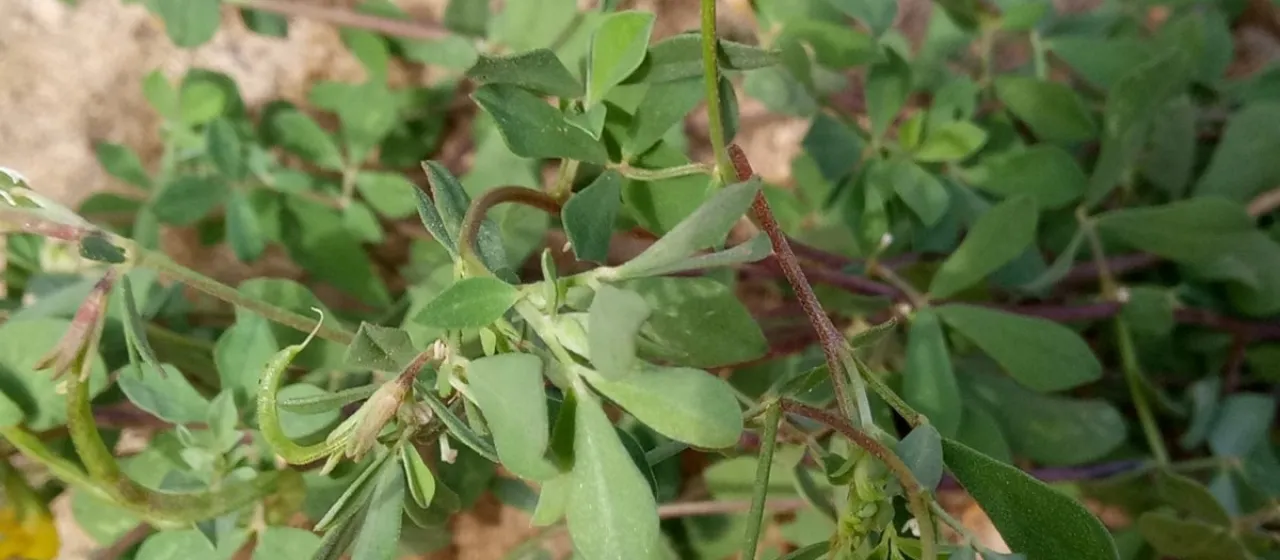
Description
Lotus drepanocarpus is a perennial herbaceous plant belonging to the Fabaceae family. Widely recognized in botanical and agricultural circles, this legume is valued for its contribution to forage production and its ability to improve soil health through biological nitrogen fixation. It serves as an essential component in managing sustainable grazing land.
Originating from regions with specific climatic patterns, this plant has adapted to thrive in areas where resilience to irregular rainfall and temperature fluctuations is necessary. Its natural distribution spans varied habitats, where it typically occupies open meadows and grasslands, demonstrating an ability to colonize and persist in diverse soil types.
The botanical structure of Lotus drepanocarpus is characterized by trifoliate leaves and unique flower heads that set it apart from other Lotus species. The plant develops a robust root system that anchors it firmly in the soil, allowing it to access moisture and nutrients in deeper layers, which contributes significantly to its drought tolerance.
Regarding agrotechnology, the species prefers well-drained soils and adequate sunlight. Successful cultivation requires careful site preparation and adherence to optimal sowing times to ensure strong establishment. Maintenance primarily involves monitoring soil pH levels and managing mowing schedules to optimize biomass production without compromising the plant's long-term vitality.
Agricultural use focuses primarily on livestock forage. The plant provides highly palatable and nutritious fodder, making it an excellent candidate for pasture improvement and hay production. Furthermore, its ability to fix atmospheric nitrogen makes it an invaluable tool for soil conservation and the restoration of depleted agricultural fields.
- Exceptional nutritional value for grazing livestock.
- Significant contribution to soil fertility and nitrogen enrichment.
- Strong adaptive capacity in various environmental conditions.
- Low maintenance requirements compared to intensive forage crops.