
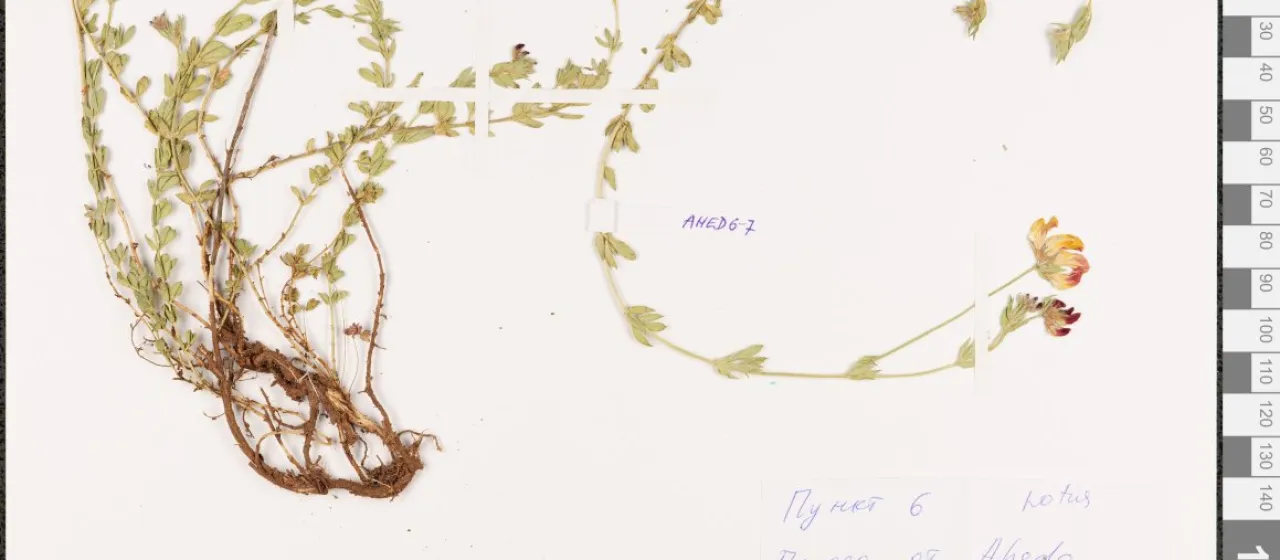
Description
Gravel bird's-foot trefoil (Lotus glareosus) is a perennial herbaceous plant belonging to the Fabaceae family. While less common in traditional commercial farming than its relatives, this species occupies a vital niche in ecological restoration and agriculture on marginal, rocky lands due to its remarkable stress tolerance.
Originating from regions with sparse vegetation and stony substrate, the plant has developed a specific range of adaptations. Its natural habitat is typically characterized by skeletal soils with low organic matter content, where it thrives by utilizing its deep root system to tap into mineral resources and moisture reserves inaccessible to less hardy plants.
Botanically, Lotus glareosus exhibits a low-growing or prostrate growth habit, which is an effective strategy against wind erosion and water loss. The plant produces distinctive yellow, pea-like flowers and ternate leaves. Its ability to thrive in poor soils is largely attributed to a symbiotic relationship with nitrogen-fixing bacteria, which enriches the surrounding soil with nitrogen over time.
Cultivation requirements for this species are minimal compared to agricultural staples. It demands excellent soil aeration and high solar exposure. Because of its ecological requirements, it is not suited for fertile, heavy clay, or waterlogged soils. Success in establishing stands depends on mimicking its native rocky habitat, ensuring that the plant is not suppressed by more competitive, taller grass species.
The primary economic use of this plant is in land management and phytoremediation rather than livestock fodder. Because of its hardy nature, it serves as a stabilizer for embankments, roadside verges, and degraded industrial sites. By stabilizing the topsoil, it prevents further erosion while gradually improving the chemical properties of the ground, preparing it for secondary successional plant species.
Regarding pests and diseases, the plant generally displays high field resistance. However, in poorly drained or overly humid conditions, it may suffer from root rot or crown rot caused by pathogenic fungi. Occasional insect pressure from seed-eating weevils can affect natural regeneration rates, but in most cases, the plant remains self-sustaining without the need for intensive chemical pesticide applications.