
Description
Lotus glinoides is a perennial herbaceous plant belonging to the Fabaceae family. Within agricultural and botanical research, this species is recognized for its remarkable ability to thrive in challenging, resource-limited environments, specifically in regions with high soil salinity.
The native distribution of Lotus glinoides spans across arid and semi-arid zones, primarily in North Africa and the Middle East. It has evolved to survive in habitats where standard forage crops fail, making it a subject of interest for breeding programs aiming to improve crop performance under climate change.
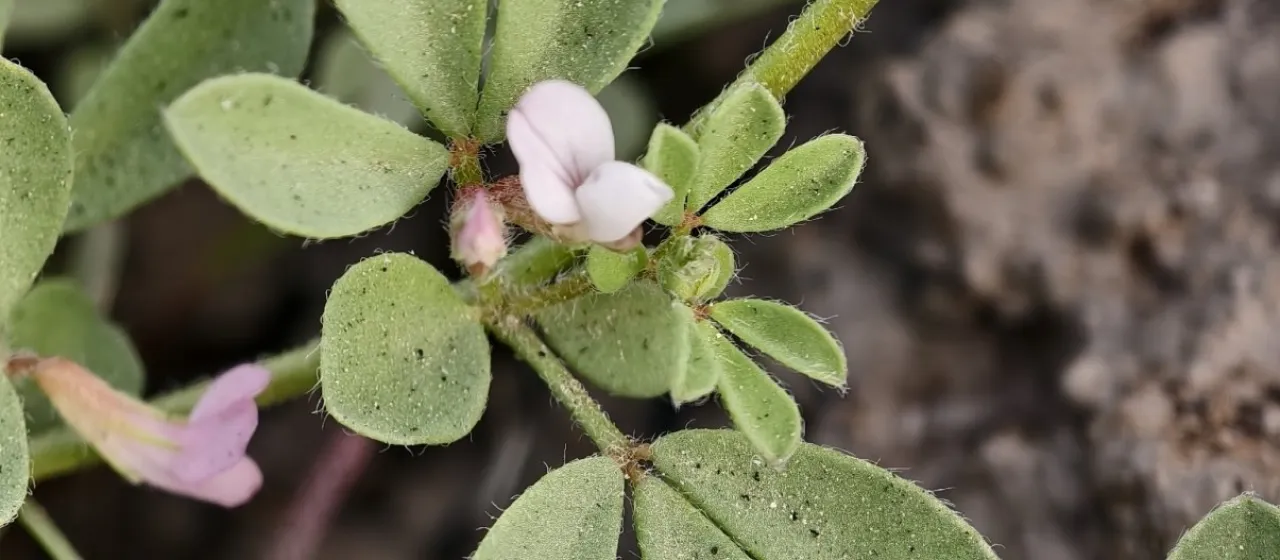
Morphologically, the plant features a robust taproot system that facilitates moisture uptake from deep soil layers. Its growth habit is prostrate, acting as a ground cover that prevents excessive soil moisture loss. The leaves are typically trifoliate, and the flowering cycle is adapted to the seasonality of rainfall in its endemic range.
Successful cultivation requires well-drained, porous soils. While it exhibits high tolerance to drought, yield optimization in a farming context would require strategic supplemental irrigation and proper site selection to avoid compaction. The plant does not require high-input fertilization due to its symbiotic nitrogen-fixing ability.
- Requires minimal irrigation once established.
- Effective for preventing soil erosion in arid areas.
- Compatible with saline soil conditions.
Regarding its utility, the species serves primarily as a stabilizer for degraded lands. In terms of protection, typical agricultural risks include common legume pests such as aphids and various fungal pathogens. Regular field monitoring is advised to prevent localized outbreaks during periods of high humidity.