
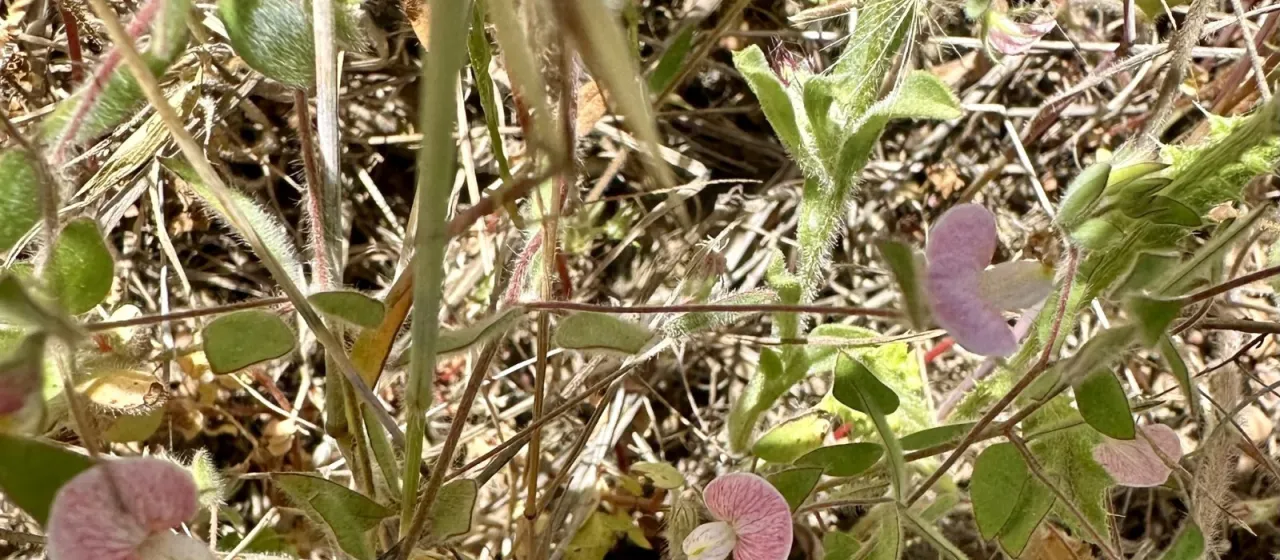
Description
Spanish clover (Lotus purshianus, formerly Acmispon americanus) is an annual legume species within the Fabaceae family. It is recognized for its agricultural value, primarily due to its role in sustainable forage production and its ability to participate in symbiotic nitrogen fixation, which naturally improves soil fertility in agricultural fields.
This species is native to North America, where it thrives in a variety of environments, including open woodlands, prairies, and disturbed areas. Its natural distribution demonstrates a significant degree of ecological plasticity, making it a reliable candidate for land restoration and soil enrichment programs in various agricultural landscapes.
Botanically, Lotus purshianus is characterized by its branching stems and compound trifoliate leaves. The plant produces delicate, light-colored flowers that are typically pollinated by bees and other insects. Following anthesis, it develops small, slender pods containing seeds that are essential for the plant's propagation and are often utilized in seed mixtures for grassland improvement.
Regarding cultivation requirements, Spanish clover prefers well-drained soils ranging from sandy to loamy textures. It shows a moderate level of drought tolerance once established, though consistent moisture is beneficial during the seedling stage for optimal biomass accumulation. It is sensitive to waterlogged conditions, so selecting sites with proper drainage is essential for successful commercial production.
The agricultural utilization of this crop is multifaceted, spanning several critical areas:
- Forage production for livestock, providing high-protein grazing material.
- Soil health management, where the plant acts as a nitrogen-fixing cover crop.
- Erosion control on sloped terrains due to its root structure.
- Integrated pest management support by providing habitats for beneficial insect populations.