
Description
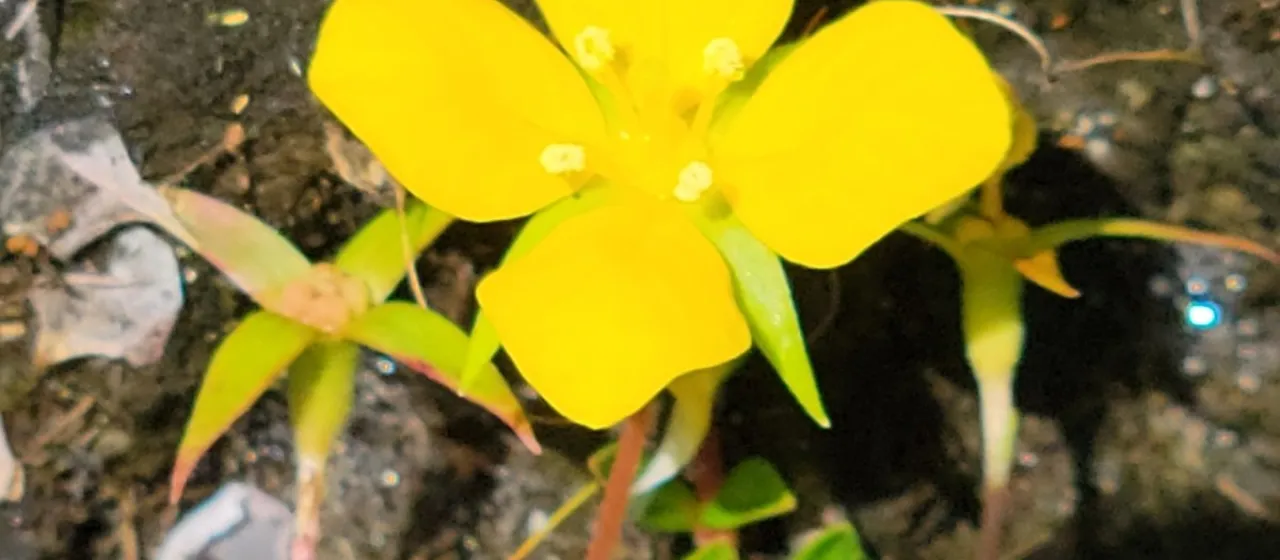
Ludwigia arcuata is a perennial herbaceous plant belonging to the Onagraceae family. It is a well-regarded species in aquatic botany, characterized by its elegant, slender leaf structure and its ability to adapt to varying degrees of submergence in wetland environments.
The species originates from North America, specifically from the southeastern United States, where it thrives in swamps and shallow freshwater habitats. Since its introduction into the horticultural trade, it has become a staple in aquarium cultivation, valued for its ability to create vibrant, reddish color accents in high-tech aquascapes.
Botanically, this plant is defined by its alternate, lanceolate leaves and delicate stems. The plant's morphology is highly plastic, meaning its appearance changes significantly based on environmental conditions. In low-light environments, the plant remains predominantly green, whereas intense light triggers the production of pigments that turn the foliage into deep shades of orange and red.
The cultivation of Ludwigia arcuata requires professional-grade agricultural practices for aquatic plants. Key requirements include high-intensity lighting, regular CO2 injection, and a substrate rich in micronutrients, particularly iron and manganese. Furthermore, the plant demands high-quality water parameters to prevent stem rot and leaf loss, which are common issues in nutrient-poor environments.
The primary economic and hobbyist use of this plant is in the ornamental aquarium industry. Proper management involves systematic pruning to encourage lateral branching and propagation. Common pests include various species of aquatic snails and algae outbreaks that can outcompete the plant for nutrients, necessitating a balanced nutrient management program.
- Light Intensity: High (at least 0.5-1 watt per liter)
- Water Temperature: 22°C to 28°C
- Carbon Dioxide: Required for healthy growth
- Nutrient Management: High demand for iron
- Propagation: Stem cuttings