
Description
Water primrose (Ludwigia grandiflora) is a perennial herbaceous aquatic plant belonging to the Onagraceae family. In its natural environment, it acts as an amphibious plant capable of developing both submerged in water and on moist shorelines, forming dense floating mats.
The plant is native to the subtropical and tropical regions of South America. Today, its range has expanded significantly due to human activity, and it can be found in many countries across Europe, North America, and Asia, where it is often classified as an aggressive invasive species that displaces local flora.
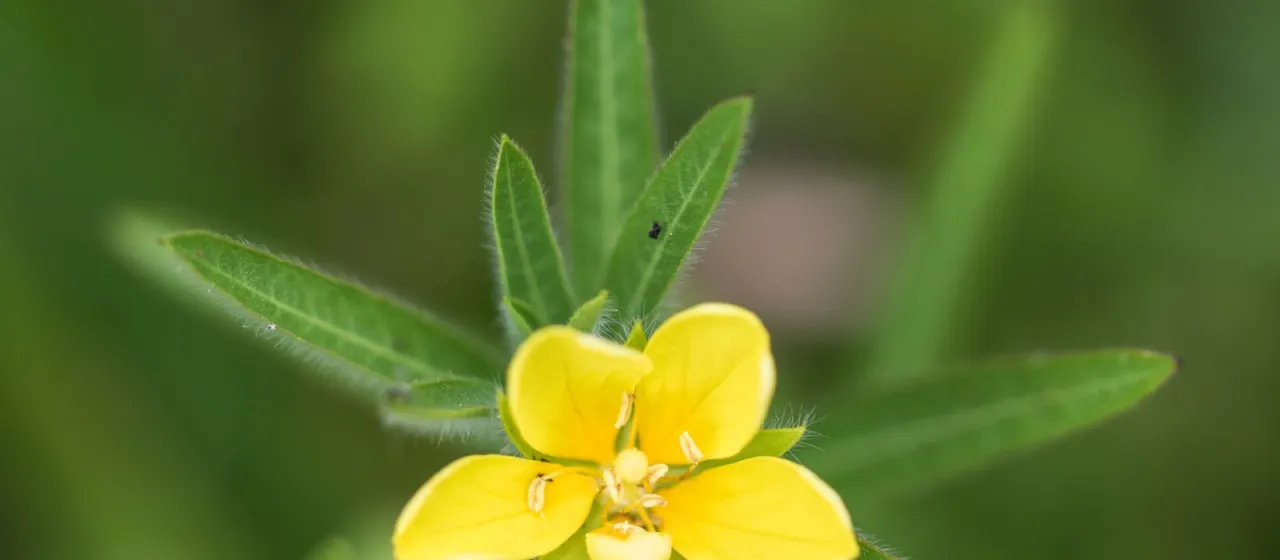
Botanically, the plant is characterized by large, bright yellow flowers and the ability to reproduce rapidly via vegetative means. The stems of the water primrose can reach considerable lengths, rooting at the nodes upon contact with the substrate. The leaves are lanceolate or oval, and the root system is shallow, allowing the plant to efficiently absorb nutrients directly from the aquatic environment.
Requirements for growth include high levels of sunlight and the presence of stagnant or slow-moving water bodies with silty bottoms. The plant is extremely undemanding regarding water and soil composition, showing high plasticity to temperature regimes, which makes it highly resilient in temperate and warm climates.
In a horticultural context, the species is mostly used in water gardening to decorate ponds; however, due to its high invasive activity, its cultivation requires strict containment. Pests and diseases do not pose a critical threat to this species under invasive conditions, as the plant possesses a robust immune system and a high rate of regeneration.