
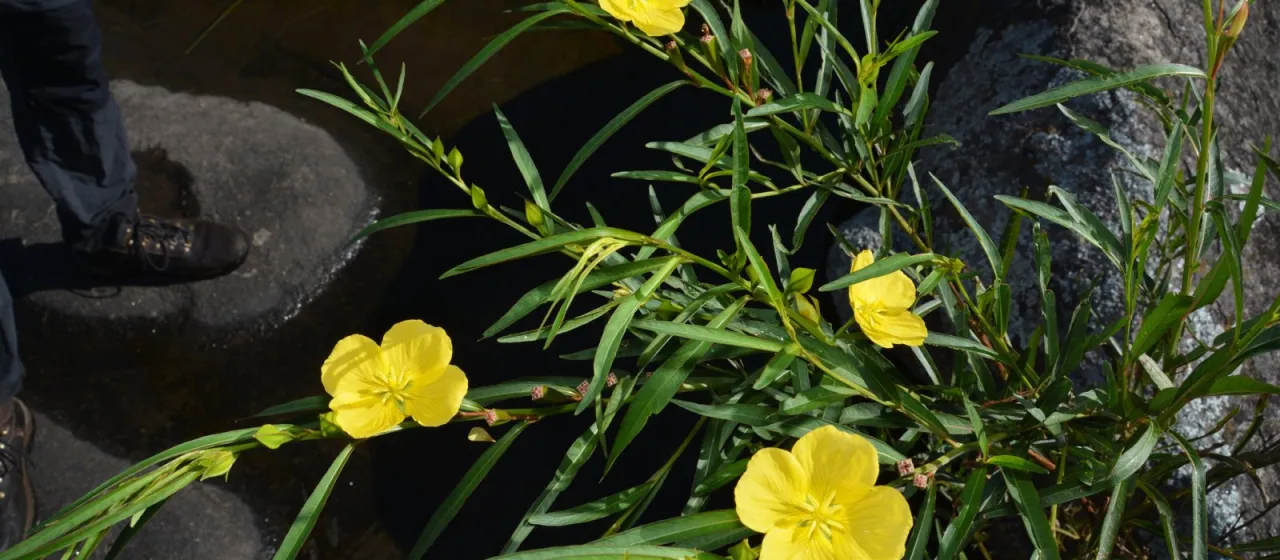
Description
Ludwigia longifolia is a perennial herbaceous plant belonging to the Onagraceae family. Characterized by its distinctively long and narrow leaves, this species is highly valued for its aesthetic appeal in aquatic environments. Unlike many common aquatic weeds, it maintains a structured growth form, making it a desirable candidate for professional water gardening.
The origin of this culture is traced back to the tropical regions of South America. It naturally thrives in wetland ecosystems, riverbanks, and marshy floodplains where nutrient-rich sediments are abundant. Due to its adaptability to tropical climates, it has become a staple in the nursery trade for aquatic and semi-aquatic plant production.
Botanically, the plant features erect, often branching stems and alternate leaf arrangement. The foliage can display variations in color depending on light intensity, ranging from deep green to reddish hues under high light. Its root system is designed for anchorage in soft, silty substrates, which allows the plant to extract nutrients efficiently from the soil profile.
Cultivation requirements are centered around high-intensity lighting and a nutrient-dense substrate. To ensure optimal growth, the water column or soil medium must be maintained at a temperature between 22°C and 28°C. Regular pruning is necessary to encourage bushiness and to prevent the lower leaves from shedding due to lack of light penetration.
Economically, Ludwigia longifolia serves the aquarium and landscape design sectors. While it is not a traditional food crop, it plays a vital role in water purification and oxygenation within artificial ecosystems. Growers must monitor for common issues such as nutrient deficiencies, which manifest as chlorosis, and pest outbreaks, specifically spider mites when grown in emersed conditions.