
Description
Ludwigia repens, commonly known as the creeping primrose-willow, is a versatile aquatic plant belonging to the Onagraceae family. It is widely cultivated as an ornamental plant in the aquarium industry and serves as a classic specimen for freshwater aquascaping, valued for its fast growth rate and vibrant coloration.
Native to North America, particularly the southern and central regions, this species thrives in swampy wetlands, slow-moving rivers, and stagnant ponds. Its natural evolution in diverse hydrological environments has enabled it to adapt well to the controlled conditions of commercial aquarium setups and home water gardens.
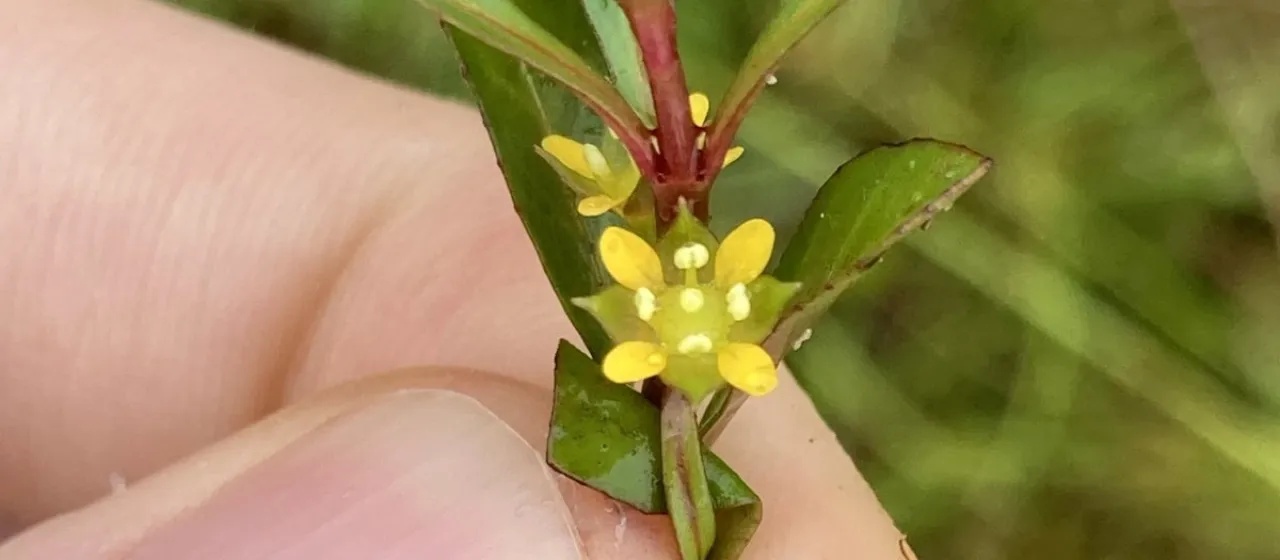
Botanically, the plant features a slender stem with opposite, ovate to oblong leaves. Its most distinctive characteristic is the chromatic variability of its foliage; under high-intensity light, the plant exhibits striking reddish-brown or deep red hues on the undersides of the leaves, contrasting sharply with the olive-green upper surfaces.
Cultivation requirements focus on light intensity and nutrient availability. To achieve optimal density and color, Ludwigia repens requires high-intensity lighting, supplemental carbon dioxide injection, and a nutrient-rich substrate. Routine maintenance involves consistent pruning to promote lateral branching and prevent the lower stems from becoming bare or leggy.
- Light requirement: High intensity.
- Ideal Temperature: 22–26 °C.
- Propagation: Stem cuttings.
- Substrate preference: Fine-grained, nutrient-rich soil.
Common horticultural challenges include the infestation of epiphytic algae, which can smother the foliage if nutrient levels are imbalanced or light is excessive. Additionally, deficiencies in micronutrients like iron or nitrogen can lead to leaf yellowing or stunted apical growth, requiring precise fertilization adjustments to restore the plant's health.