
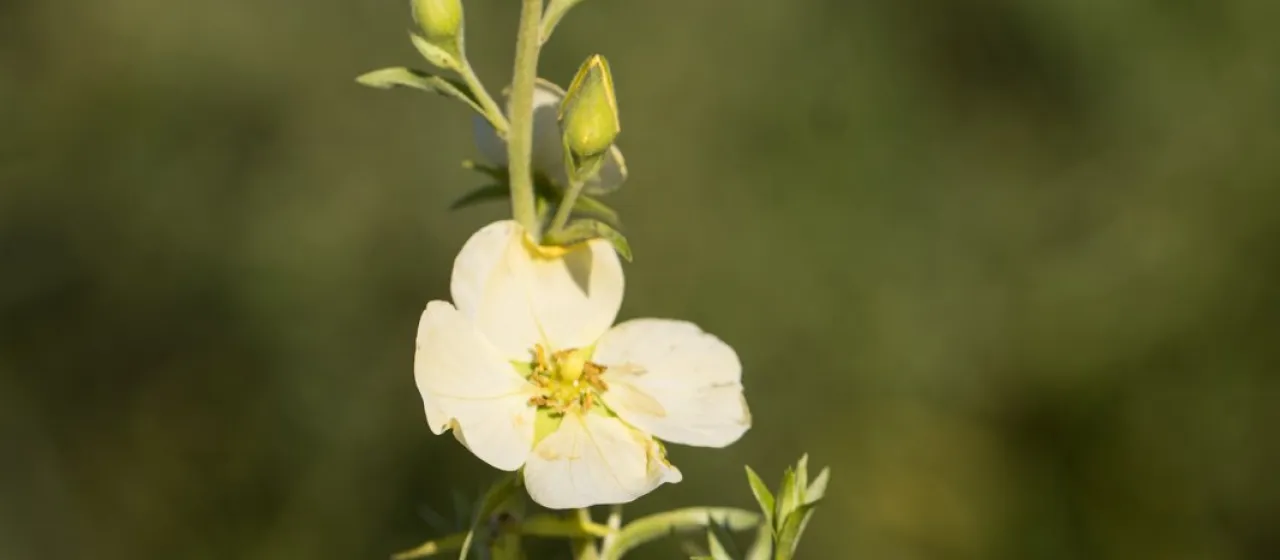
Description
Silky Ludwigia (Ludwigia sericea) is a perennial herbaceous plant belonging to the Onagraceae family. The species is characterized by distinct pubescence covering its stems and foliage, which gives the plant a soft, silky appearance. It is a specialized botanical subject well-adapted to environments where water availability is consistently high.
The native range of this species is concentrated in the tropical and subtropical regions of South America. It typically inhabits riverbanks, floodplains, and wetland areas. Its evolution in such ecosystems has enabled the plant to thrive in nutrient-rich but highly saturated soils, making it a natural inhabitant of riparian zones.
Botanically, the plant features erect or trailing stems that can grow up to 80 centimeters. The leaves are generally lanceolate, displaying a characteristic silky texture due to fine hairs on the surface. Its reproductive structures consist of small, yellow flowers with four petals, emerging from the leaf axils under appropriate environmental conditions.
Cultivation requirements for Ludwigia sericea center on maintaining a moisture-rich environment. The substrate should be loose, organic-rich, and slightly acidic to support healthy root development. Adequate lighting is essential for preventing etiolation, as the species requires sufficient photosynthetic activity to maintain its distinct leaf density and coloration.
- Optimal temperature 22–28°C
- Rich, acidic substrate
- High humidity requirements
- Vegetative propagation via cuttings
In terms of practical application, this species is primarily valued in ornamental pond gardening and specialized botanical collections. Disease management involves preventing fungal infections caused by poor air circulation or stagnant water. Common pests include aphids and spider mites, which typically target the succulent new growth of the plant during periods of stress.