
Description
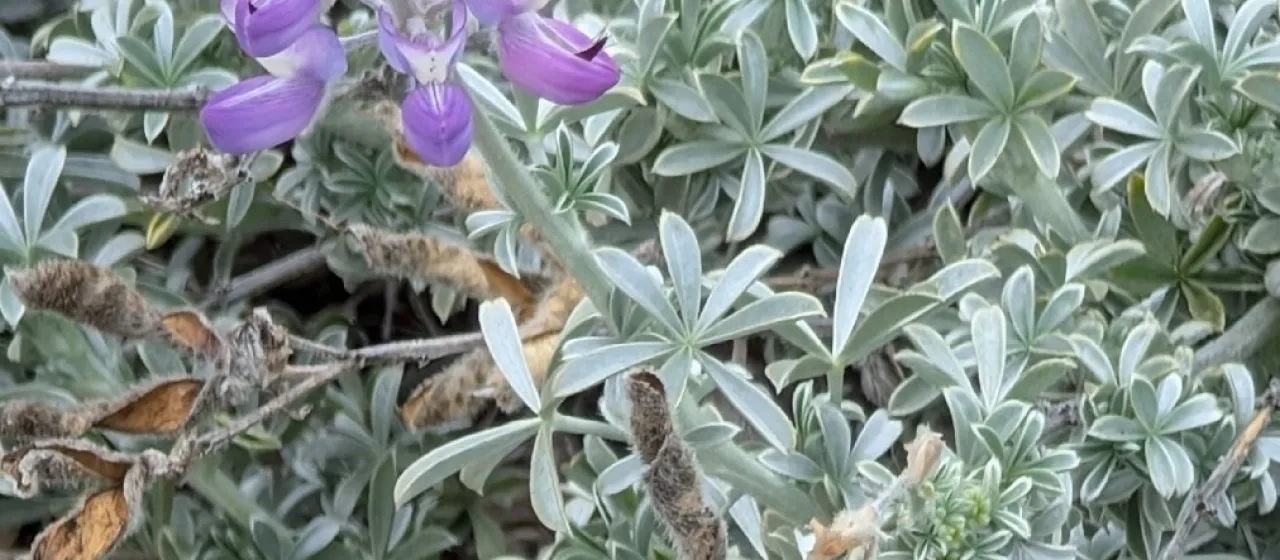
Chamisso's lupine (Lupinus chamissonis) is a perennial shrub that belongs to the Fabaceae family. It is a distinctive evergreen plant known for its silver-hairy foliage and attractive blue-purple spikes. As a member of the lupine genus, it shares the biological resilience typical of plants native to harsh coastal environments.
The species is native to the coastal regions of California, specifically thriving in sand dune habitats. Its natural distribution area is limited to coastal scrub zones where it has evolved to withstand intense sunlight, salt spray, and highly porous, sandy soils. This background makes it a unique candidate for specific ecological niches.
Botanically, Lupinus chamissonis reaches heights of approximately one meter. Its leaves are palmately compound and covered with dense trichomes, which are an evolutionary adaptation to preserve water in arid, sandy conditions. The inflorescences are dense, blooming mainly in the spring, which provides essential nectar for local pollinators like bees and butterflies.
Agricultural and gardening requirements for this plant focus on excellent drainage. It is highly susceptible to root rot if placed in heavy, waterlogged soils. It requires full sun exposure and performs best in sandy or rocky substrates where its deep taproot can establish firmly. The plant is drought-tolerant once established and does not require frequent fertilization.
In terms of usage, Chamisso's lupine is utilized primarily for dune stabilization and ornamental landscaping in coastal areas. It is particularly valued for its role in nitrogen fixation, which improves soil quality, and its ability to grow in environments where other species struggle to survive.
- High drought tolerance.
- Ornamental value in xeriscaping.
- Natural nitrogen-fixing capability.
- Soil stabilization properties.