
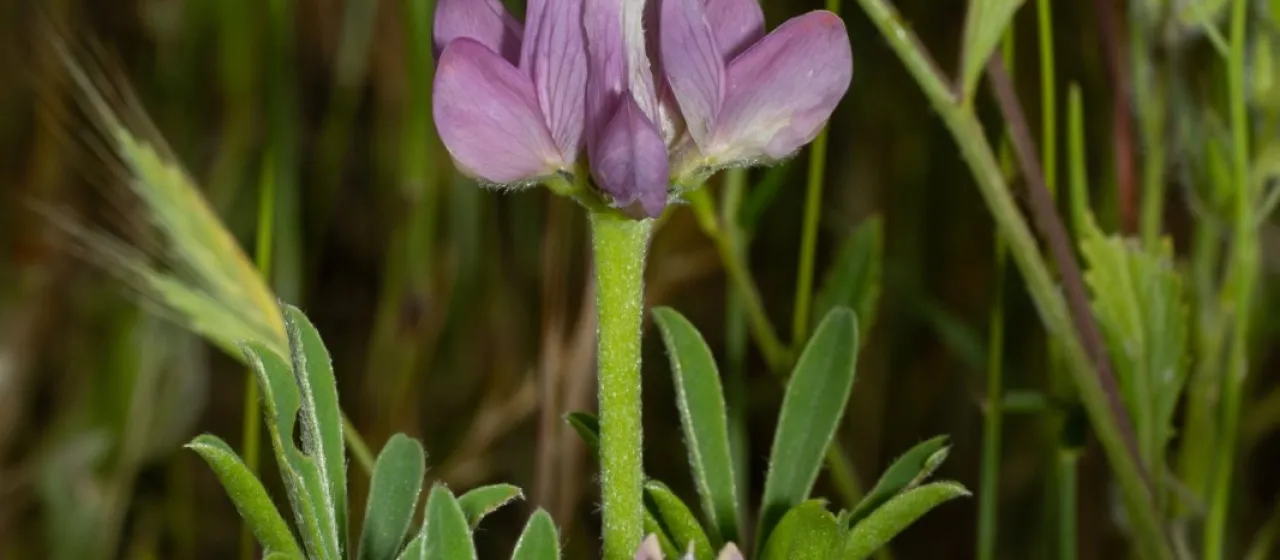
Description
Spanish lupin (Lupinus hispanicus) is an annual leguminous plant belonging to the Fabaceae family. As a significant agricultural crop, it is recognized for its nitrogen-fixing capabilities and its adaptability to harsh environmental conditions, providing essential biomass for both soil improvement and livestock nutrition.
The species is native to the Iberian Peninsula, where it has evolved to thrive in poor, sandy, and acidic soils. Due to its Mediterranean origins, it is well-adapted to regions with dry, warm climates. It serves as a vital resource in marginal areas where higher-input crops often fail to produce satisfactory yields.
Botanically, Lupinus hispanicus is characterized by its palmately compound leaves and distinct inflorescences featuring small, blue-to-purple flowers. The plant possesses a robust taproot system, which not only aids in water absorption during drought periods but also facilitates the physical improvement of soil structure.
Agricultural requirements for successful cultivation include:
- Well-drained soils with a preference for slightly acidic sandy substrates.
- Adequate sunlight exposure throughout the growing season.
- Proper crop rotation to minimize the build-up of soil-borne pathogens.
- Management of fungal diseases like anthracnose during high-humidity periods.
The primary agricultural use of the Spanish lupin is as a green manure crop, which helps in nitrogen enrichment of the soil for subsequent crops. Additionally, it is increasingly utilized in forage production. Due to its nutritional profile, it plays an important role in developing sustainable, low-input farming systems within its natural and introduced ranges.