
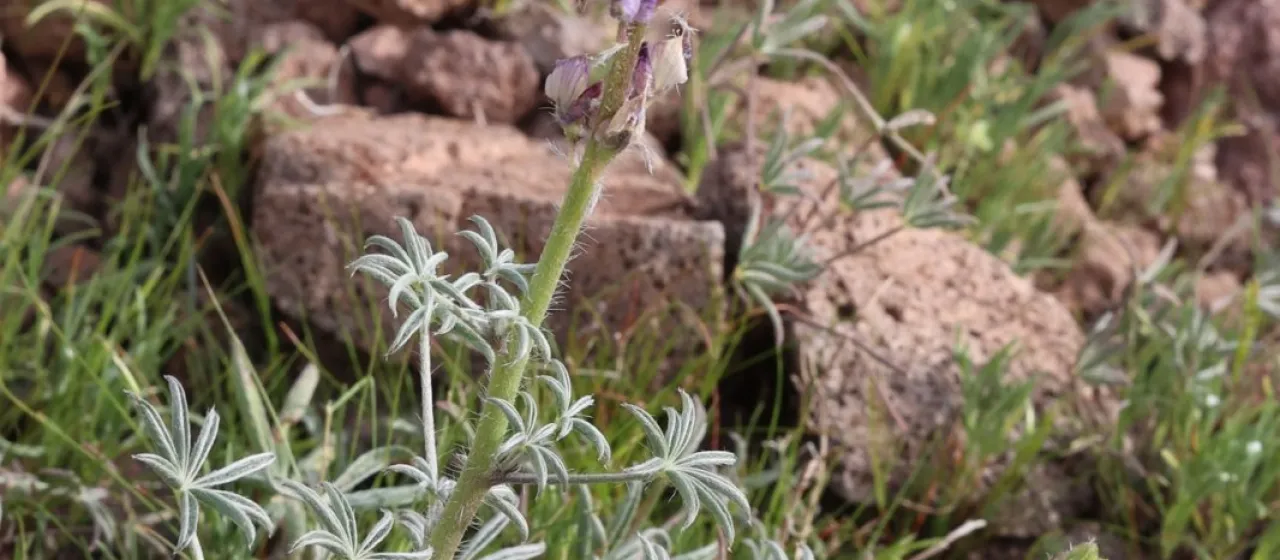
Description
Coulter's lupine (lat. Lupinus sparsiflorus) is an annual herbaceous plant belonging to the Fabaceae family. This species is widely recognized for its preference for arid environments and is characterized by its distinctively sparse, loose inflorescences, which distinguish it from the denser spike-like structures seen in more common lupine varieties.
The native range of this plant encompasses the southwestern United States, primarily within the desert regions of California and Arizona, and extending into northern Mexico. It thrives in open, sandy, or rocky habitats where competition for moisture is high, demonstrating significant evolutionary adaptations to survive in harsh, moisture-limited climates.
Botanically, it features palmately compound leaves and stems covered with fine hairs, which help the plant retain moisture. The flowers are typically a striking shade of blue to violet, often with subtle white or yellowish markings on the banner petal. The blooming period is relatively short, triggered by spring rainfall, leading to the rapid development of small, pubescent pods containing seeds.
Agricultural and horticultural requirements focus on mimicking its native desert conditions. Cultivation success depends heavily on full sunlight and soils with excellent drainage, such as sandy or gravelly loams. Over-watering is the primary cause of failure; therefore, the application of irrigation must be extremely measured, specifically avoiding any waterlogged conditions that could trigger root rot.
In terms of agricultural utility, Coulter's lupine serves as a valuable plant for restoration ecology in arid regions and as an ornamental species in water-wise gardening. Like other legumes, it maintains a symbiotic relationship with nitrogen-fixing bacteria, which allows it to thrive in nutrient-poor soils and contribute to long-term soil enrichment when managed correctly in a crop rotation or cover cropping scheme.
- Excellent tolerance to drought and heat.
- Nitrogen-fixing capabilities for soil health.
- Ornamental value for xeriscaping projects.
- Significant pollinator attractant for local ecosystems.