
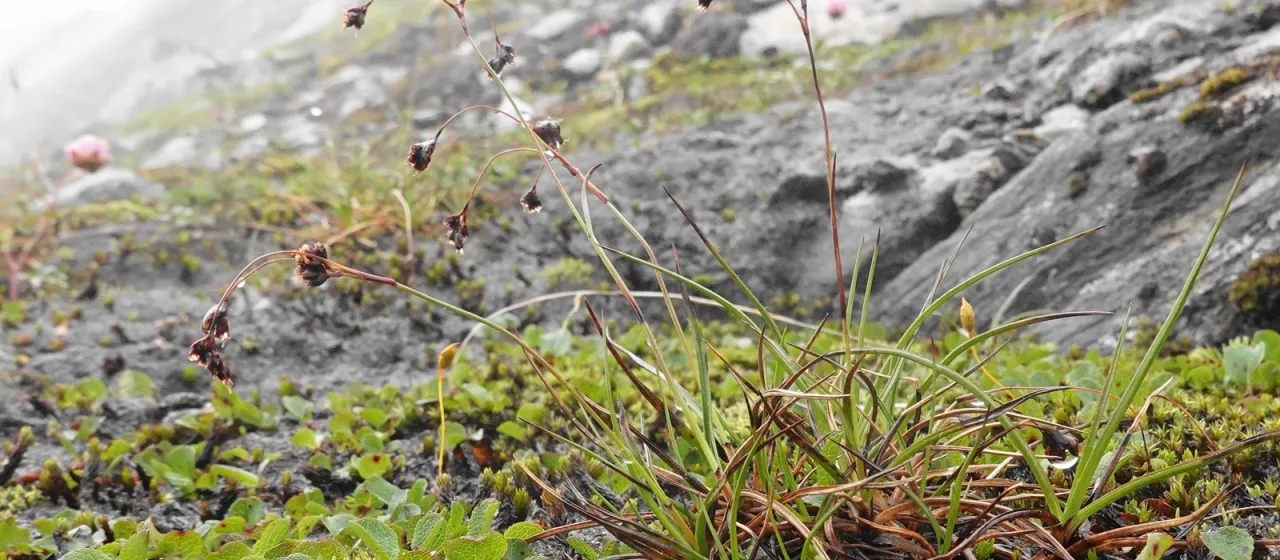
Description
Curved woodrush (Luzula arcuata) is a perennial herbaceous plant belonging to the Juncaceae family. While not a conventional agricultural crop for mass production, it is highly valued in specialty horticulture and ecological projects for its unique ability to thrive in harsh, high-altitude environments.
The plant originates from arctic and alpine regions throughout the Northern Hemisphere. Its distribution stretches from the harsh climates of Scandinavia and Northern Russia to the high mountain ranges of North America and Asia, where it survives in conditions that preclude the cultivation of most other plant species.
Botanically, this species is defined by its dense, tufted growth habit and linear leaves with distinct marginal hairs. The inflorescence consists of small, dark-colored flowers that typically curve downwards, providing the plant with its common and scientific names. Its root system is adapted for life in nutrient-poor and rocky substrates.
Agronomic requirements are centered around mimicking alpine soil conditions. Optimal growth is achieved in acidic, well-draining soils with consistent moisture levels. Heavy nitrogen fertilizers should be avoided, as the plant is adapted to low-nutrient environments and may suffer from root instability if over-fertilized or waterlogged.
In terms of хозяйственного usage, the plant is primarily employed in rock gardens, scree garden designs, and mountain landscape restoration. Pests and diseases are rarely a concern in open, well-ventilated environments. However, poor drainage remains the primary threat, as it can lead to fungal rot in the dense leaf clumps.