
Description
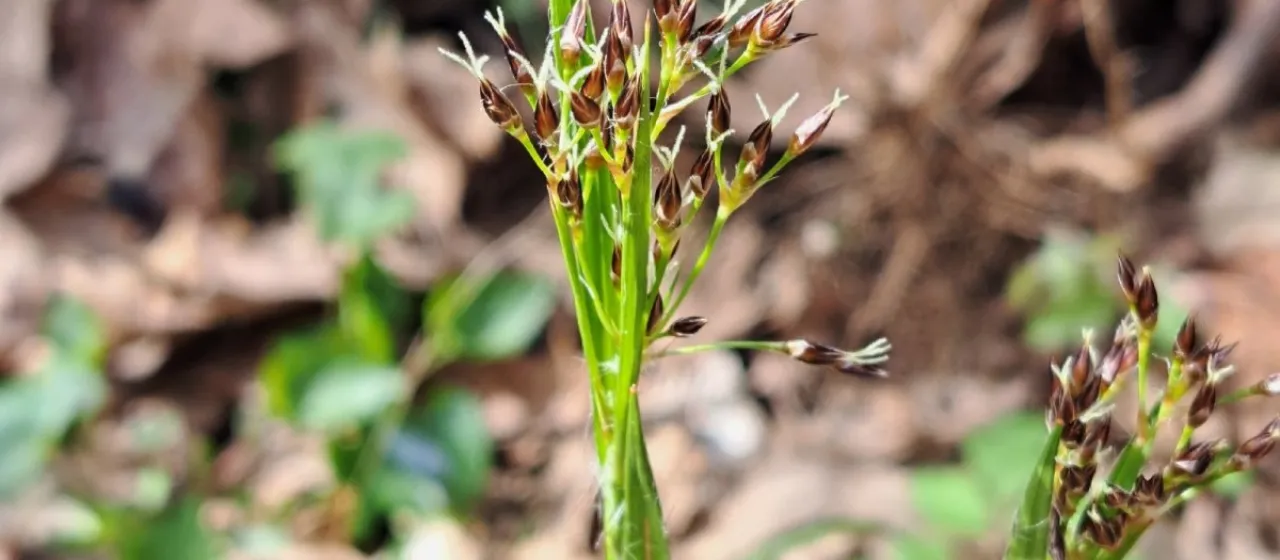
Southern wood-rush (Luzula forsteri) is a perennial herbaceous plant belonging to the Juncaceae family. Often mistaken for a grass, it is distinguished by its characteristic flat, dark green leaves edged with long, white, silky hairs. This distinct anatomical feature makes it easily identifiable among other rush-like species found in temperate climates.
The plant originates from Europe, the Caucasus, and parts of Western Asia. Its natural habitat includes deciduous woodlands and shaded hillsides. Due to its evolutionary adaptation to forest floors, the plant is exceptionally shade-tolerant, which makes it a preferred species for horticultural projects that require greenery in areas with limited direct sunlight.
Botanically, Luzula forsteri forms compact, tufted clumps. It develops linear leaves that emerge from a basal rosette, with flowering stems reaching approximately 20 to 40 centimeters in height. In late spring, it produces loose, brownish-yellow inflorescences that offer a subtle, naturalistic aesthetic appeal to woodland gardens or perennial borders.
Regarding cultivation requirements, the Southern wood-rush thrives best in well-drained, humus-rich, and slightly acidic soils. While it appreciates constant moisture, it is susceptible to rot in waterlogged conditions. The plant is highly resilient and generally hardy, requiring minimal intervention once established, except for seasonal weeding and occasional mulching to maintain soil moisture.
The primary economic use of this plant is within the ornamental horticulture sector. It is widely utilized as a low-maintenance ground cover in shade-loving garden designs or as a feature plant in wildlife-friendly landscapes. It possesses high resistance to major garden pests and fungal diseases, making it a sustainable choice for gardeners looking for durable, long-term vegetative solutions.