
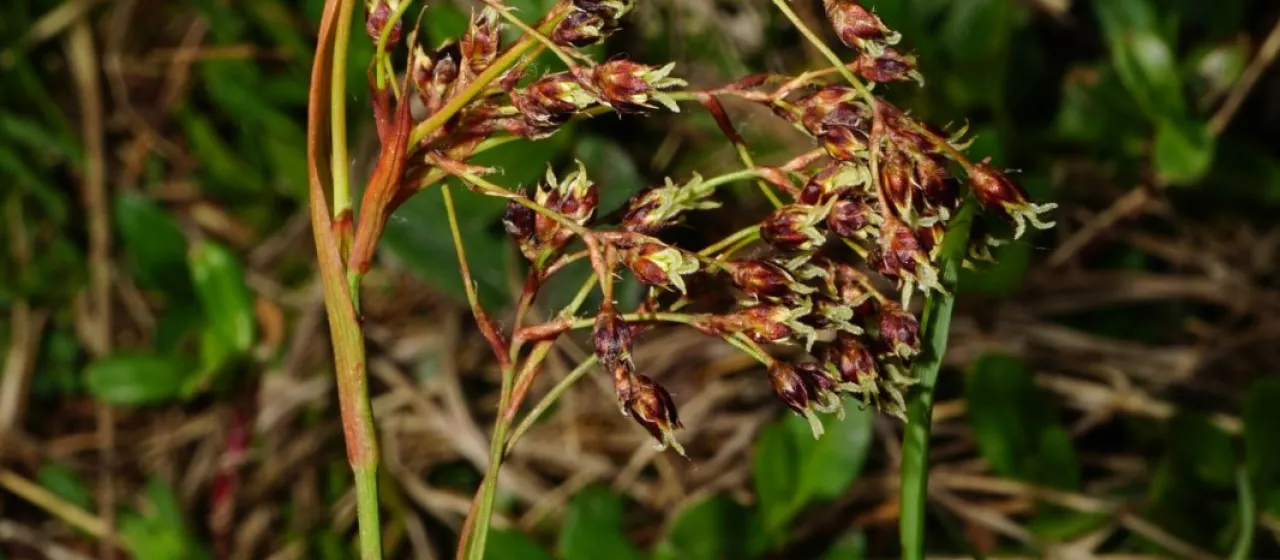
Description
Luzula glabrata, commonly known as smooth woodrush, is a perennial herb belonging to the Juncaceae family. Unlike many ornamental rushes, this species is recognized for its ecological role in mountain pastures and its resilience in harsh climatic zones, serving as a reliable component of native vegetation.
The natural range of Luzula glabrata is primarily centered in the mountainous regions of Central and Eastern Europe. It thrives in cool, humid environments and is frequently found in subalpine meadows and forest clearings. Its evolutionary adaptation allows it to flourish in soils that are acidic and consistently moist, typical of high-altitude ecosystems.
Botanically, the plant is characterized by its rhizomatous root system and narrow, linear leaves adorned with sparse, soft hairs. The flowering stems grow upright, producing loose, panicle-like inflorescences. These structures are efficient at wind pollination, ensuring the plant maintains a stable population density across varied terrain.
Agricultural management of the species requires attention to soil pH and moisture levels, as the plant does not perform well in arid, alkaline conditions. It is a slow-growing species during the initial establishment phase, necessitating weed control until the root system is fully developed. Once established, it becomes highly competitive and resistant to typical grass diseases.
In terms of economic utility, Luzula glabrata is valued for soil erosion control on slopes and as a component of mixed fodder in highland cattle grazing. Its ability to thrive without intensive fertilization makes it a sustainable choice for restoring degraded pastures in alpine and subalpine farming regions, contributing to the overall stability of the landscape.