
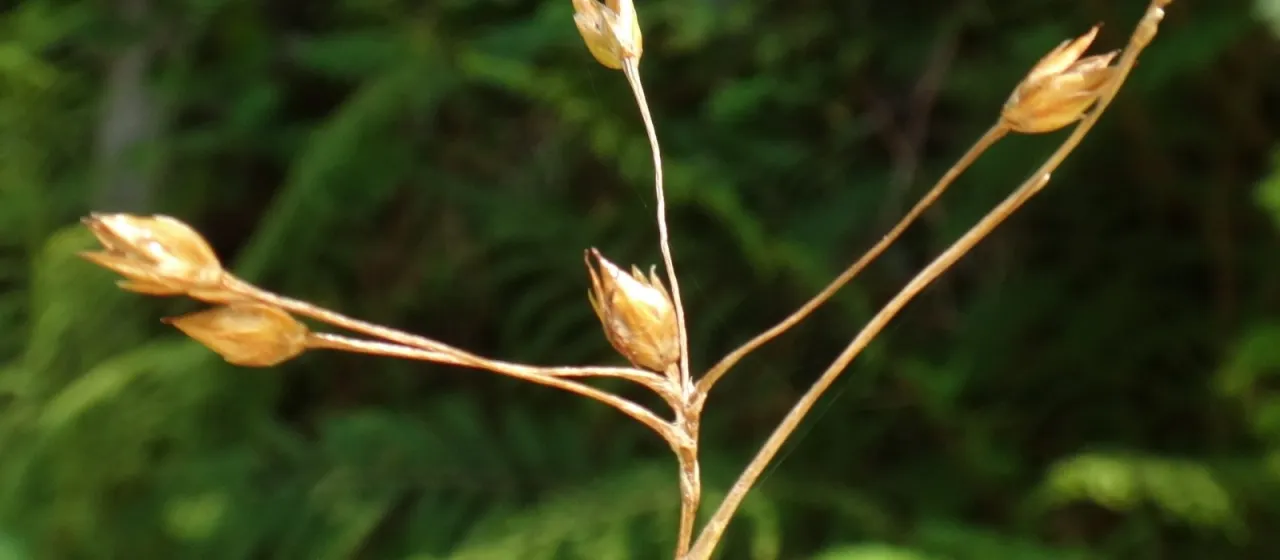
Description
Luzula luzulina, commonly known as a type of woodrush, belongs to the Juncaceae family. While it resembles typical grasses in appearance, it is taxonomically distinct, characterized by specific flowering structures and fruit types that differentiate it from the Poaceae family. It is a perennial herbaceous plant valued for its ability to thrive in forest-like environments.
The plant originates from the temperate zones of Eurasia, typically found in wooded areas, forest edges, and moist meadows. It is naturally adapted to cool, damp conditions where sunlight is filtered by tree canopies. This historical evolution makes it an ideal choice for modern shaded garden designs where other plant species often struggle to establish themselves.
Botanically, it features narrow, linear leaves with distinctive hair-like margins—a hallmark of the Luzula genus. It grows in compact, dense clumps via short rhizomes. During the flowering period, it produces light-colored, airy inflorescences that provide a delicate texture to the plant's overall appearance, maintaining its decorative appeal throughout the growing season.
Cultivation requirements involve providing rich, well-draining, and consistently moist soil. Unlike many ornamental grasses, Luzula luzulina does not tolerate drought well, so irrigation management is crucial for its health. It thrives in partial shade to full shade, making it a reliable performer in areas under dense shrubbery or woodland plantings. It is exceptionally winter-hardy and requires minimal maintenance once established.
In terms of agricultural and horticultural use, the plant is widely utilized as a ground cover in landscape architecture. It is highly resistant to major pests and diseases, which simplifies the maintenance process for landowners. Due to its robustness and aesthetic properties, it is frequently used in woodland gardens, around tree bases, and in naturalistic landscape projects that aim to restore native-like plant communities.