
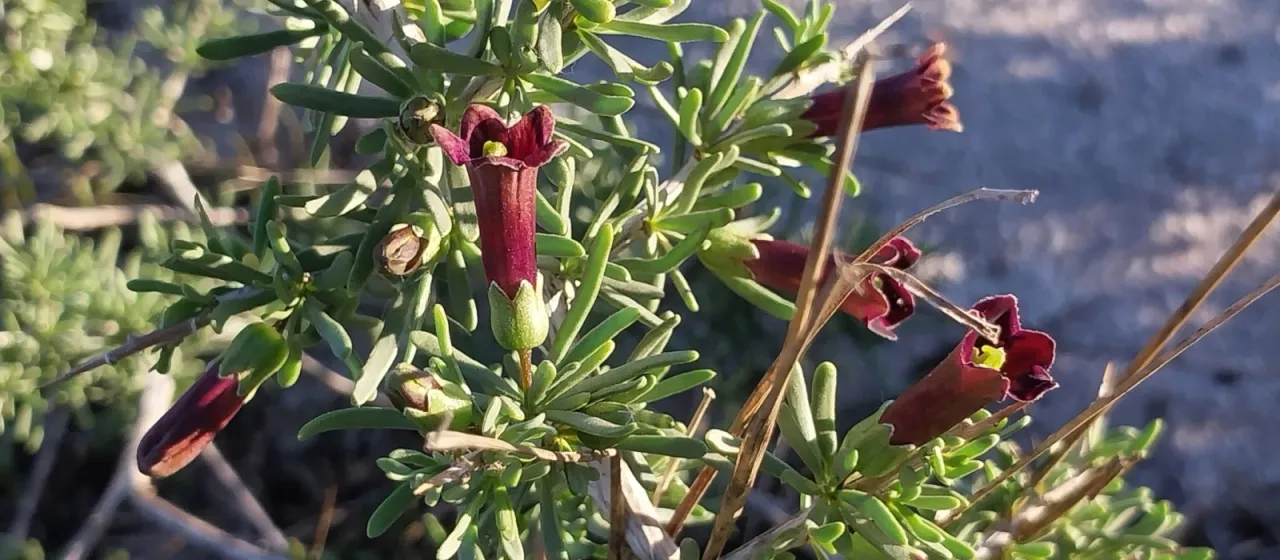
Description
African boxthorn (Latin: Lycium afrum) is a perennial, thorny shrub that belongs to the Solanaceae (nightshade) family. It is a highly specialized species adapted to dry environments, known for its rugged growth habit and its ability to thrive where many other agricultural crops fail to establish.
The plant originates from the arid regions of Southern Africa and has successfully naturalized in various Mediterranean countries, including parts of North Africa and Southern Europe. Its distribution is primarily driven by its tolerance to high temperatures and prolonged periods of drought, which allows it to colonize challenging, rocky terrain.
Botanically, Lycium afrum is characterized by its stiff, woody stems that are densely armed with sharp spines. These spines are modified shoots that serve as a defense mechanism against herbivores. The foliage is small and narrow, which reduces transpiration, helping the plant to maintain water balance during intensive solar radiation.
In terms of agricultural management, this species requires very little input. It thrives in well-drained, sandy, or stony soils and is highly resistant to soil salinity. Once the plant is established, it requires almost no supplemental irrigation, making it an excellent candidate for low-maintenance landscaping and desert reclamation projects.
The economic and practical uses of African boxthorn are diverse, ranging from the establishment of natural, impenetrable fences to soil stabilization. By planting Lycium afrum, farmers can effectively reduce wind erosion in open fields. Additionally, researchers continue to explore the pharmacological potential of its secondary metabolites found in its berries and leaves.
- Exceptional drought resistance and water-use efficiency.
- Suitability for erosion control on slopes and coastal areas.
- Resistance to many common pests affecting typical solanaceous crops.
- Low requirement for fertilizers and soil amendments.