
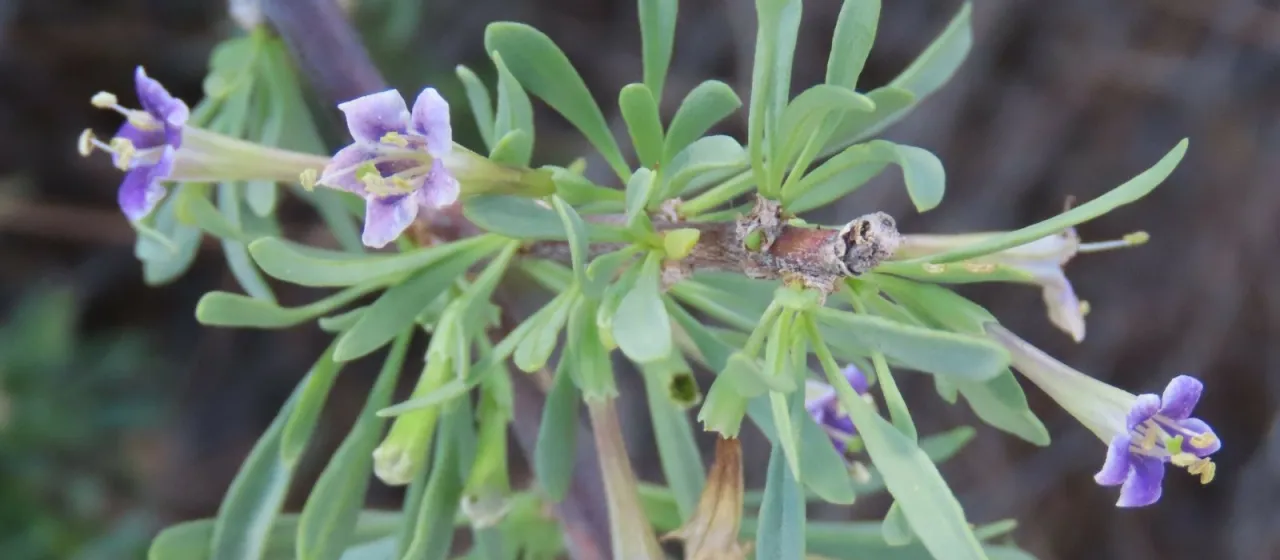
Description
Lycium bosciifolium is a perennial shrub belonging to the Solanaceae family. As a specialized member of the genus, it exhibits remarkable biological plasticity, enabling it to thrive in environments that would be prohibitive for many other horticultural crops. It is widely recognized by botanists for its resilience in arid and semi-arid zones.
The origin of this species is traced to the southern regions of Africa, where it has adapted to specific climatic stressors. The natural distribution is limited to habitats characterized by high solar radiation and irregular rainfall patterns. Consequently, its cultivation is largely concentrated in areas with Mediterranean or similar dry-summer climates, where it can be managed effectively without excessive irrigation costs.
Botanically, the plant is characterized by its compact, thorny structure, which serves as a protective mechanism against herbivores. The leaves are typically small, leathery, and possess a thick cuticle to prevent water loss. During the reproductive phase, the plant produces distinctive flowers followed by small berries that contain seeds, allowing the species to propagate effectively in the wild.
Cultivation requirements for Lycium bosciifolium focus primarily on soil drainage and site exposure. The plant flourishes in sandy or gravelly soils with high porosity, as it is highly susceptible to root decay if waterlogged. Successful crop management involves minimal irrigation, particularly during the dormant season, and full sun exposure to ensure proper carbohydrate accumulation and plant health.
- Requires high levels of direct solar radiation.
- Preferential growth in sandy, well-draining soils.
- Low water requirements once the plant is established.
- Resistance to high thermal stress during the summer.
In terms of agricultural and landscape usage, this shrub is utilized primarily for environmental stabilization in arid regions and as an ornamental specimen in xeriscaping. While its berries are known to have nutritional characteristics common to the Lycium genus, its economic value is currently tied more to its utility in research and hardy landscape design rather than large-scale food production. Typical pests include common aphids and mites, which can be managed with standard integrated pest management practices.