
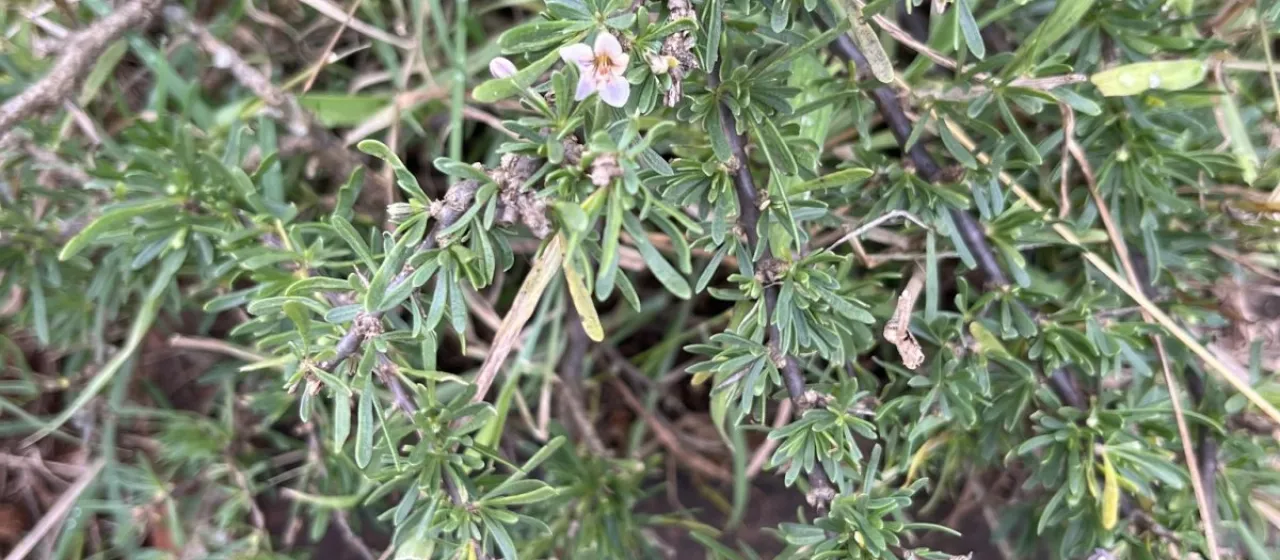
Description
Lycium cinereum, commonly known as a species of boxthorn, is a perennial shrub belonging to the Solanaceae family. It is a highly resilient plant known for its ability to thrive in extremely arid and harsh environmental conditions, making it an excellent candidate for ecological restoration in dryland regions.
The native range of this species is primarily found in the arid regions of Southern Africa. It has evolved to survive in desert-like climates where water is scarce and soil quality is poor. Because of this, the plant is naturally equipped with mechanisms to conserve moisture and protect itself from extreme heat and intense sunlight.
Botanically, Lycium cinereum is a dense, spiny shrub characterized by small, gray-green leaves that reflect intense light. The plant produces small, tubular flowers that later develop into berries. Its root system is exceptionally deep and expansive, allowing the shrub to stabilize loose soils and draw water from deep subterranean layers, which is crucial for its survival.
Regarding cultivation, this species requires very little agricultural intervention. It thrives in well-drained, sandy, or rocky soils and requires full sun exposure. It is highly resistant to soil salinity, making it suitable for areas where other crops cannot grow. Agrotechnical management primarily involves protecting young seedlings from weeds until they are established, after which the plant becomes virtually self-sustaining.
The main commercial and agricultural applications of Lycium cinereum include land rehabilitation, windbreak creation, and erosion control. Its thorny nature makes it an effective living fence for livestock management. Furthermore, it plays a vital role in local biodiversity, providing shelter and sustenance for local avian and insect populations in environments where vegetation is otherwise sparse.
- Exceptional drought tolerance.
- High tolerance to saline soils.
- Effective for erosion prevention.
- Low maintenance and high survivability.