
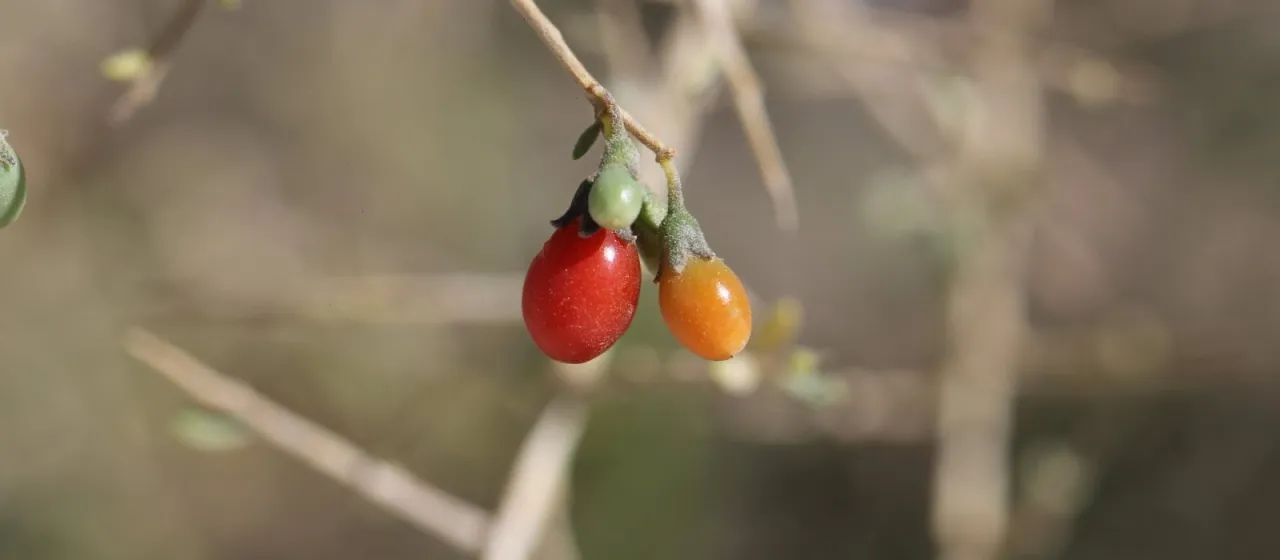
Description
Lycium grevilleanum is a perennial shrub belonging to the Solanaceae family. As a member of the genus Lycium, it is characterized by its remarkable resilience to harsh environmental conditions and its distinct morphological features that enable it to thrive in arid climates.
The native distribution area of this species is located in the arid regions of South America, primarily within Argentina. It has evolved to inhabit semi-desert landscapes, where it functions as a critical component of the local flora by stabilizing sandy soils and surviving with minimal moisture availability.
Botanically, the plant presents as a dense, woody shrub often featuring thorns, which provide protection against herbivory. Its foliage is composed of small, narrow leaves designed to minimize transpiration, while its reproductive structures follow the standard pattern of the Solanaceae, producing resilient flowers.
Cultivation requirements for this species include high exposure to sunlight and well-draining, sandy-textured soils. From an agricultural management perspective, the plant is highly resistant to drought and can tolerate poor nutrient conditions, making it a low-maintenance choice for dryland environments.
In terms of practical application, the plant is mainly utilized in environmental restoration projects and as a component of protective live fences in arid landscapes. While it is not a major industrial crop, its inherent hardiness makes it a valuable study subject for arid-land botany and potential ornamental use.
- Exceptional drought and heat tolerance
- Ability to thrive in saline and nutrient-poor soils
- Low maintenance requirements in appropriate climates