
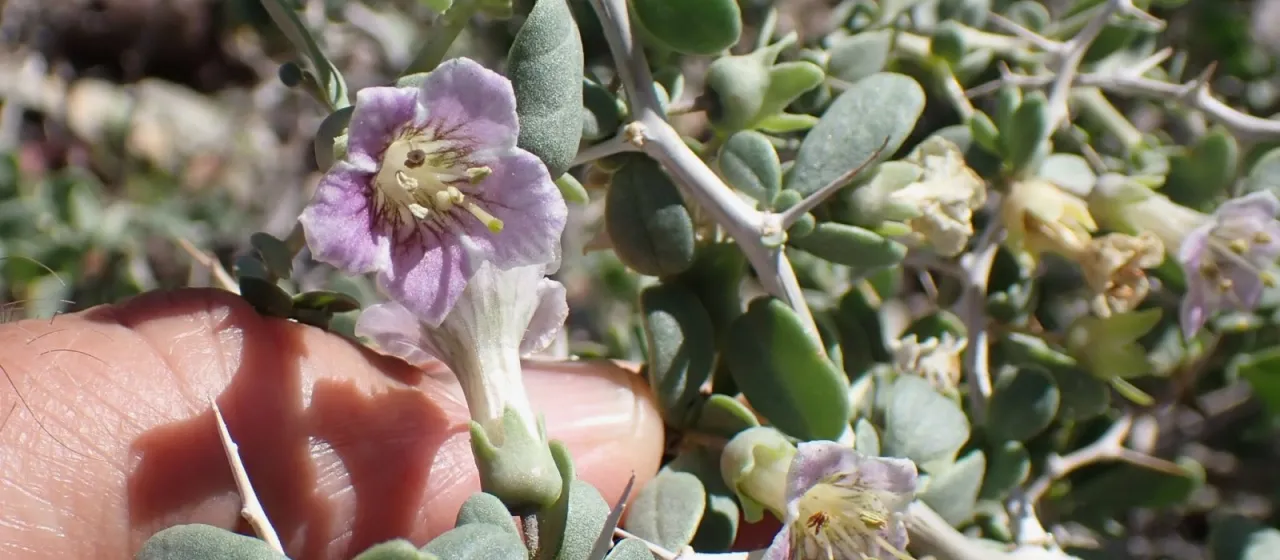
Description
Pale Desert Thorn (scientific name Lycium pallidum) is a perennial deciduous shrub belonging to the Solanaceae family. It is a highly resilient plant species that thrives in environments where most agricultural crops would perish due to lack of water and extreme temperatures.
The native range of this species covers the arid regions of the southwestern United States and northern Mexico. Throughout history, this plant has played a significant role in desert ecosystems, providing food for wildlife and structure for fragile soils. Its ability to colonize dry canyons and rocky slopes demonstrates its unique evolutionary adaptations.
Botanically, Lycium pallidum is characterized by a dense, thorny structure that can reach heights of up to two meters. The leaves are grayish-green, often appearing waxy, which helps minimize transpiration. The plant produces tubular, pale-colored flowers, which later develop into small, juicy, red berries containing numerous small seeds.
Cultivation requires specific conditions: full sun exposure is non-negotiable for healthy development. The soil must be exceptionally well-drained, preferably sandy or rocky; any clay-heavy soil that retains moisture during the winter is likely to cause root rot. Fertilization should be minimal, as the plant is evolved for nutrient-poor, alkaline desert soils.
- Extreme drought tolerance once established.
- High tolerance for saline soil conditions.
- Natural pest resistance in arid environments.
- Low water requirements suitable for xeriscaping.
- Useful as a windbreak in dry climates.
Economically, the Pale Desert Thorn is valued for its edible berries, which have been historically harvested by indigenous peoples. In modern agriculture and horticulture, it serves as an excellent candidate for xeriscaping projects and desert reforestation. Common pests include aphids and mites, while fungal infections can occur if the plant is subjected to prolonged periods of high humidity or poor drainage.