
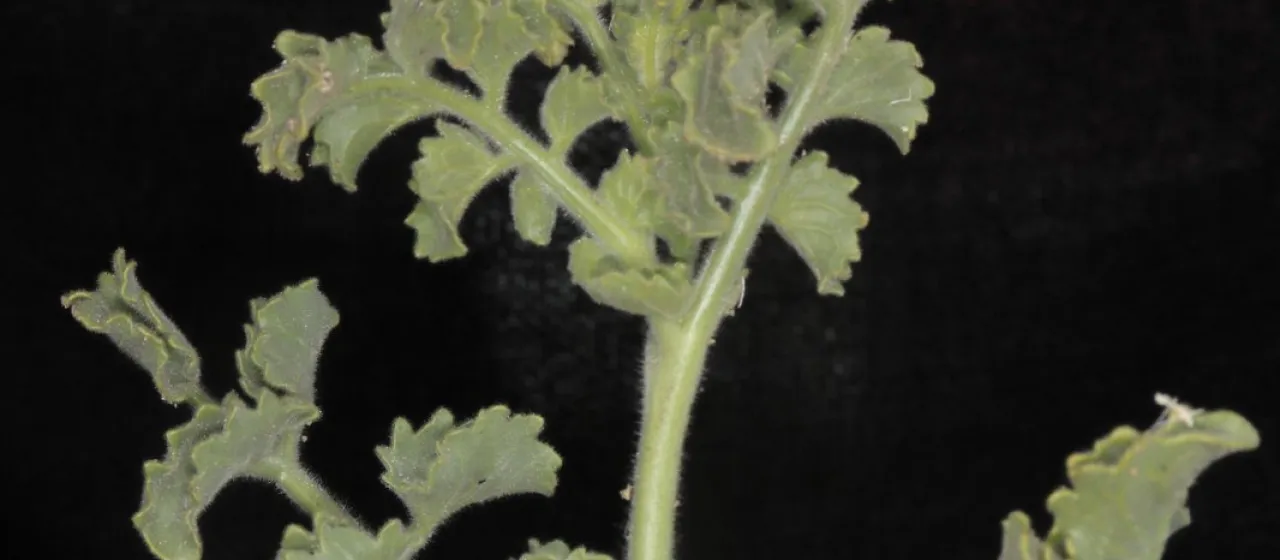
Description
Lycopersicon pennellii (commonly referred to as Solanum pennellii) is a wild species of the Solanaceae family. As a wild relative of the domesticated tomato, it has become a cornerstone for researchers aiming to improve the resilience of agricultural crops against abiotic stressors.
Originating from the arid regions of Peru, this plant is naturally adapted to harsh desert-like environments. Its evolutionary history has endowed it with the ability to thrive in poor soils with very limited rainfall, making it a unique subject for studies on plant survival mechanisms in extreme climates.
The botanical characteristics of Lycopersicon pennellii are distinct, particularly in its foliage. The plant is covered in glandular trichomes that secrete substances to prevent water loss and deter pests. Unlike cultivated tomatoes, its fruits are small and not typically consumed due to their specific flavor profile and low sugar content.
In terms of agricultural and scientific utility, this species is indispensable for plant breeding programs. Its genome contains specific alleles that confer resistance to drought and salt stress. By introducing these traits into commercial lines, breeders can create varieties that maintain yield stability even in regions threatened by water scarcity.
Agronomic requirements for this species are specialized, as it is not grown for commercial fruit production. It requires high light intensity and well-drained substrate, as it is highly susceptible to root rots when waterlogged. Growers and researchers manage pests such as whiteflies and spider mites to ensure the health of the plant material used in breeding experiments.