
Description
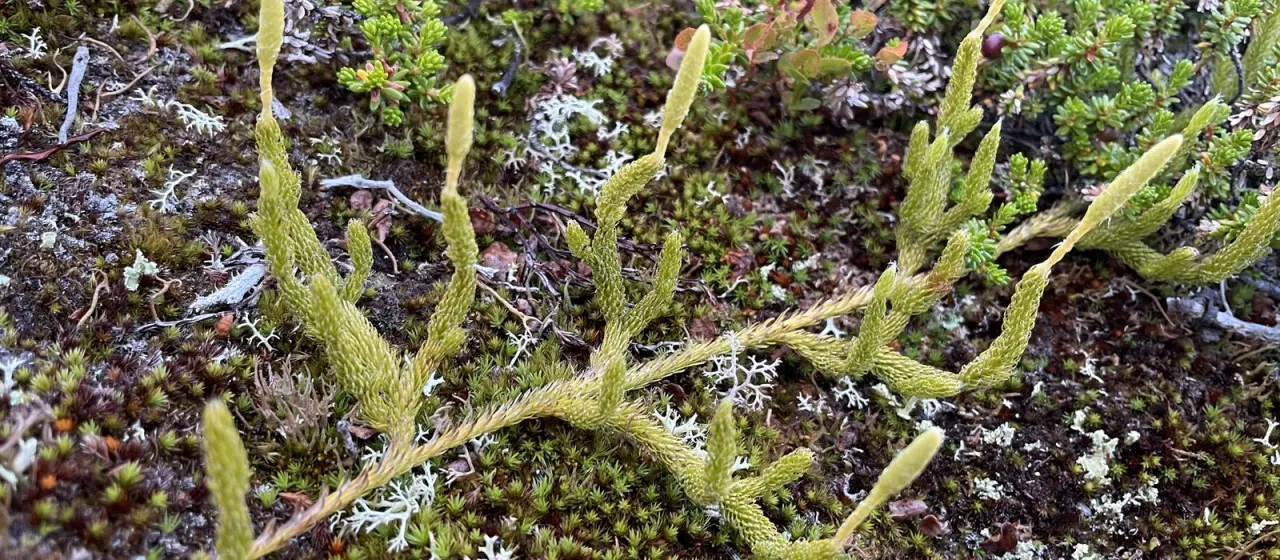
One-cone clubmoss (Lycopodium lagopus) is a perennial, evergreen vascular spore-bearing plant belonging to the Lycopodiaceae family. It is characterized by its prostrate, creeping growth habit, which allows it to form dense, mat-like colonies on the forest floor or tundra landscape. This species is highly valued for its unique resilience in northern climates.
The native range of this species extends across the circumboreal regions, encompassing northern parts of Eurasia and North America. It thrives in coniferous forests, heathlands, and arctic tundra environments. Its presence is often an indicator of acidic, nutrient-poor, yet moist soils, which are essential for its continued survival in competitive plant communities.
Botanically, Lycopodium lagopus displays a system of long, creeping stems that anchor into the soil via adventitious roots. The upright shoots are densely covered with tiny, linear-lanceolate leaves that are typically appressed to the stem. The strobili, or spore-bearing cones, are sessile and arise directly from the ends of the fertile branches, setting it apart from other clubmoss species.
Environmental requirements for this plant are specific and difficult to replicate in an agricultural setting. It demands high air humidity, protection from direct pollution, and a specific symbiotic relationship with soil fungi (mycorrhiza) to germinate and grow. Consequently, there are no large-scale cultivation practices for this species, as it relies entirely on its natural successional habitat.
In terms of economic utility, the spores of the clubmoss have been traditionally harvested for various industrial and medical purposes. They are notable for being hydrophobic and non-adhesive, making them ideal as a mold release agent in foundry work and as a dusting powder in pharmacy. Due to the very slow growth rate of the plant, sustainable harvesting is strictly monitored to prevent over-extraction and preserve biodiversity.
- Strict mycorrhizal dependence.
- Extreme sensitivity to habitat disturbance.
- Hydrophobic properties of the spores.
- Very slow vegetative regeneration.