
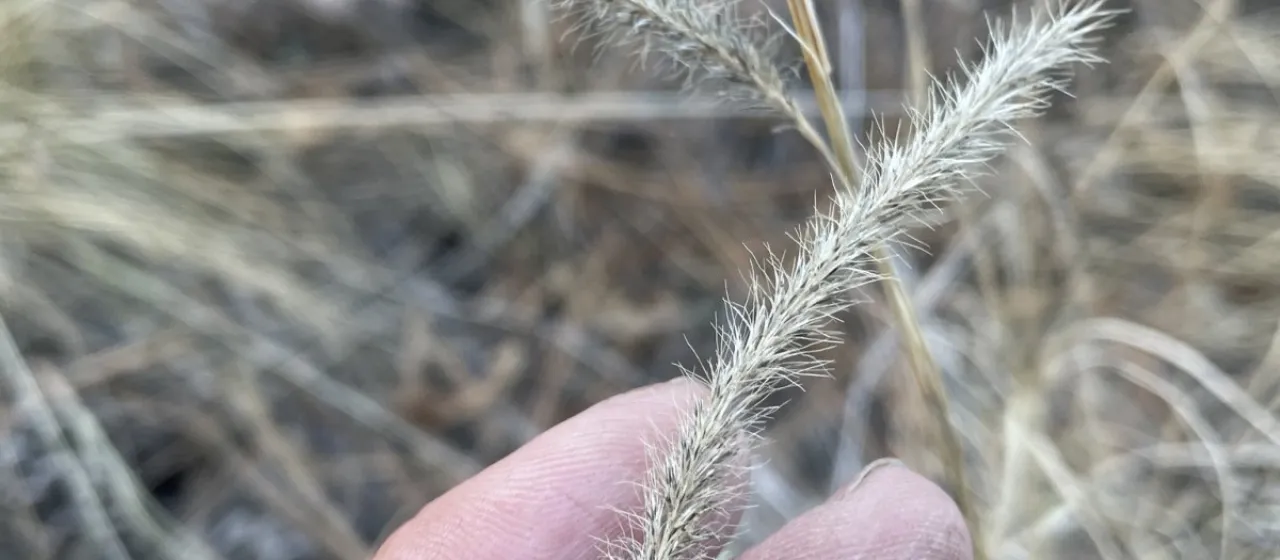
Description
Lycurus phleoides, commonly known as wolfstail, is a perennial bunchgrass belonging to the Poaceae family. This species is recognized for its ability to thrive in rugged landscapes and its significance in supporting rangeland health. As a bunchgrass, it forms dense clusters, which provide stability to the soil and protection for associated flora.
Native to the southwestern United States and Mexico, this grass is predominantly found in arid and semi-arid environments. It is well-adapted to high-elevation grasslands, rocky slopes, and plateaus. Its evolutionary history in these harsh regions has equipped it with robust mechanisms to survive extreme temperature fluctuations and periods of prolonged drought.
The botanical structure of Lycurus phleoides features thin, upright culms and a distinctive terminal inflorescence that looks like a tight, spike-like panicle. The leaves are typically narrow and somewhat rigid, which aids in water conservation. The plant's root system is fibrous and deep, allowing it to efficiently tap into limited water resources, making it a pioneer species in reclaiming disturbed lands.
Regarding cultivation and environmental requirements, this species favors well-drained soils, including calcareous or rocky substrates. It is not suitable for waterlogged areas, as stagnant moisture leads to root health issues. Agronomic management involves controlled grazing practices to prevent overgrazing, which allows the plant to maintain its vigor and produce seeds effectively for natural regeneration.
In terms of agricultural use, wolfstail is primarily valued as a forage species for livestock. It remains palatable during its growth stages and contributes to the overall nutritional profile of native pasture lands. Beyond forage, it serves a critical role in soil stabilization and erosion control, as its root structure binds soil particles together, preventing sediment loss in wind-prone or sloping terrains.
- Excellent drought tolerance.
- High value for soil stabilization.
- Suitable for extensive grazing systems.
- Adaptation to various soil types.