
Description
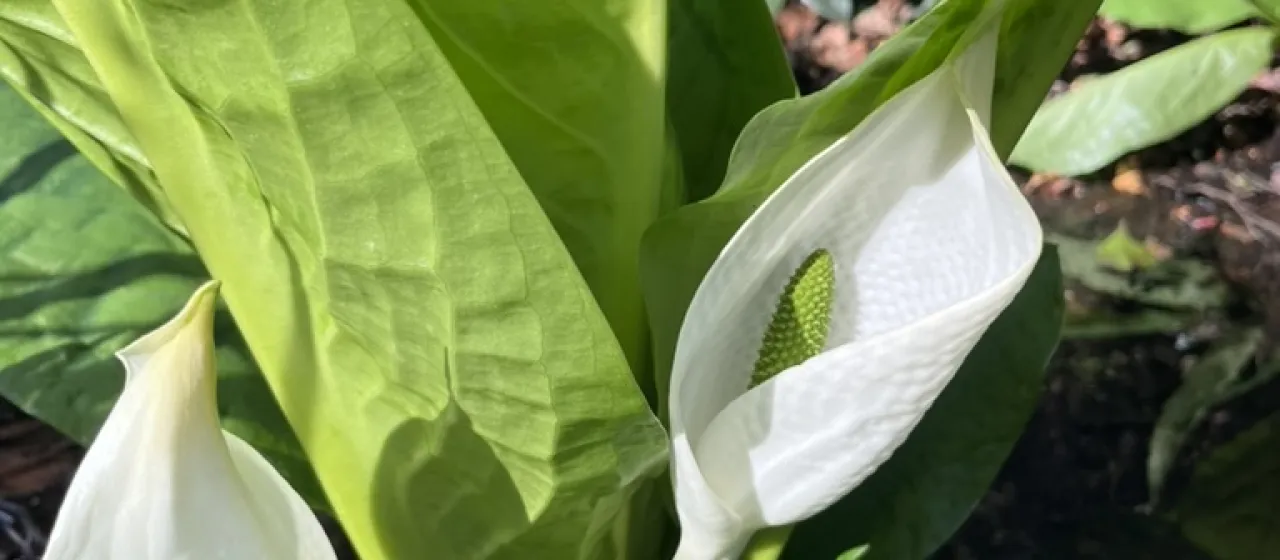
Asian skunk cabbage (Lysichiton camtschatcensis) is a robust perennial plant belonging to the Araceae family. Unlike aquatic lilies, it is primarily a bog or marginal plant that thrives in wet environments. It is highly valued in horticulture for its spectacular white spathes that emerge in early spring, often while snow is still on the ground.
The native habitat of this plant includes the Far East regions of Russia, such as Kamchatka and Sakhalin, as well as northern Japan. It naturally populates marshes, wet woodlands, and the banks of streams. In agricultural and horticultural practices, it is treated as a specialized plant for ornamental wetland management.
Botanically, the plant is characterized by a thick rhizome and large, succulent leaves that can span up to one meter in height. The inflorescence consists of a spadix sheltered by a bright white spathe, which serves to attract pollinators early in the season. The plant undergoes a vigorous growth phase during the spring and summer months.
Cultivation requirements focus on moisture and soil quality. The plant demands nutrient-rich, humus-heavy soils that remain perpetually damp or waterlogged. Partial shade is optimal, as direct intense sunlight can scorch the broad leaves. Proper maintenance involves ensuring the rhizomes are protected from desiccation, as the plant lacks drought tolerance.
The primary use of the species is in landscape architecture for the margins of ponds and water features. Pests typically include slugs and snails, which can cause significant damage to the foliage during the early spring growth flush. The plant is generally hardy and resilient, though gardeners should ensure good water circulation to avoid anaerobic conditions in the root zone.